Quick Answer: Tabarca Island is a small Mediterranean island off the coast of Alicante, famous for its crystal-clear water, protected marine reserve, historic walled village, and beautiful snorkelling spots. You can reach it by boat from Alicante or Santa Pola, explore the island on foot, enjoy traditional seafood, and spend an unforgettable day beside the sea. Allow approximately five to seven hours for a relaxed visit, including time on the island, and plan your boat journey separately.
Imagine stepping aboard a boat in Alicante, leaving the city behind, and watching the Mediterranean stretch out around you.
The buildings disappear into the distance.
The sea changes from deep blue to brilliant turquoise.
And somewhere ahead, a small island begins to emerge on the horizon.
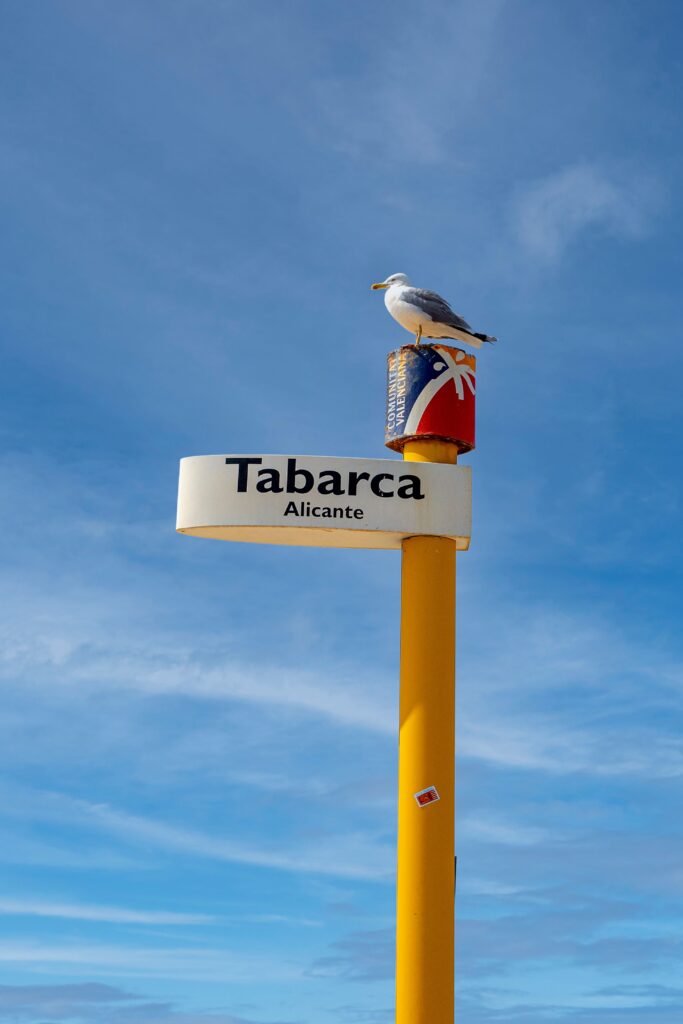
This is Tabarca.
A tiny Mediterranean escape where old stone walls overlook the sea, fishing boats rest beside a picturesque harbour, and the water is so clear that you can sometimes see the seabed beneath you.
But Tabarca Island is much more than a beautiful place to swim.
Its history involves pirates, a Spanish king, and families brought across the Mediterranean from North Africa.
Its waters became Spain’s first marine reserve.
And its narrow village streets still preserve the atmosphere of a place that has lived by the sea for centuries.
For visitors staying in Alicante, Tabarca offers something completely different from a typical city sightseeing day.
It’s an adventure, a beach escape, and a journey into history, all wrapped into one unforgettable Mediterranean experience.
Here’s everything you need to know before you go.
1. Discover Why Tabarca Island Is So Special
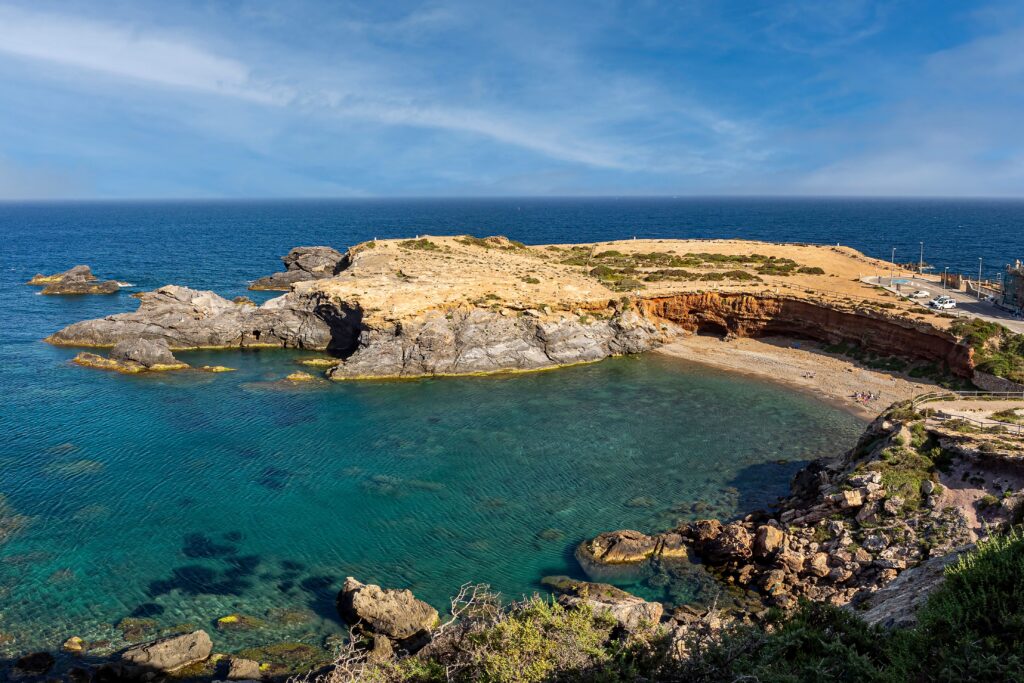
Tabarca Island is the only inhabited island in the Valencian Community.
Located off the coast near Santa Pola, it belongs administratively to Alicante and forms part of a small archipelago surrounded by protected Mediterranean waters.
The main island is approximately 1.8 kilometres long, and around 400 metres wide at its widest point.
That makes it small enough to explore on foot, but surprisingly rich in things to discover.
An Island With a Remarkable History
Tabarca’s story is unlike that of most Mediterranean holiday destinations.
For centuries, the island’s location made it important to sailors, fishermen, and those navigating the coastline.
Its shores were once associated with Barbary pirates.
Then, during the eighteenth century, King Charles III ordered the establishment of a fortified settlement.
Families of Genoese origin who had been held captive in North Africa were brought to the island, and a new community began to take shape.
The village was protected by defensive walls, and its streets were laid out as part of an ambitious plan to create a permanent settlement.
Today, you can still walk through that historic village.
The walls, gateways, and old buildings are reminders that this beautiful island once played a serious role in Mediterranean coastal defence.
For current travel information, visitor guidance, and island attractions, consult the official Alicante Tourism guide to Tabarca Island.
Spain’s First Marine Reserve
Tabarca’s second extraordinary feature lies beneath the water.
In 1986, the surrounding marine area was declared Spain’s first marine reserve.
Its protected environment includes rocky seabeds, marine life, and important underwater meadows of Posidonia oceanica, a Mediterranean seagrass.
These habitats help support the remarkable biodiversity that makes the island so attractive to snorkellers.
And that combination of history and nature is what makes Tabarca special.
You can spend the morning walking through an eighteenth-century village, and the afternoon discovering an underwater world.
Why visit: Tabarca combines Mediterranean scenery, fascinating history, and protected marine life in one compact destination.
Best for: Couples, families, snorkelling enthusiasts, photographers, and adventurous day-trippers.
Local tip: Don’t treat Tabarca as just another beach. Leave enough time to explore the historic village, and you’ll discover a completely different side of the island.
2. Explore the Historic Walled Village of Tabarca
Arriving at Tabarca feels a little like stepping into another era.
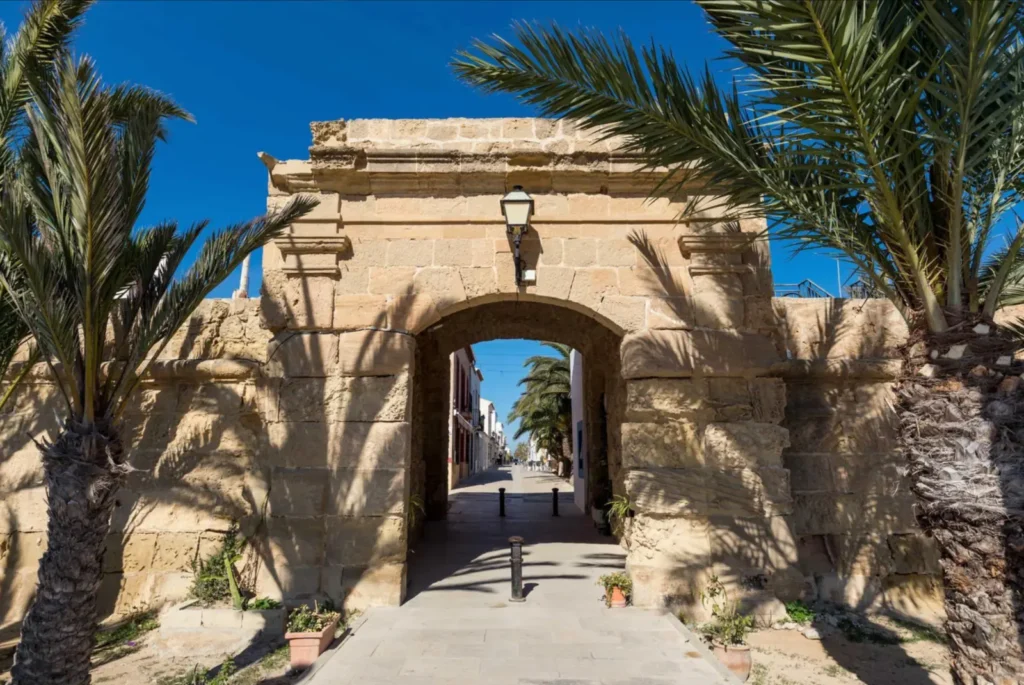
The island’s historic village is surrounded by eighteenth-century fortifications, with old stone gateways leading into narrow streets and traditional Mediterranean buildings.
It’s compact, charming, and wonderfully atmospheric.
Walk Through the Ancient Gateways
The fortified settlement preserves three historic entrances.
These gateways once controlled access to the village, and remain among Tabarca’s most distinctive architectural features.
As you walk through them, imagine the island centuries ago, when the walls were an essential part of its defence.
Today, they’re beautiful places to photograph, particularly when the sunlight brings out the warm tones of the stone.
Discover the Church of San Pedro and San Pablo
Within the village stands the Church of San Pedro and San Pablo.
Dating from the eighteenth century, the church reflects the religious and cultural life of the community established on Tabarca.
Its relatively simple appearance fits the character of the island.
It’s not a grand cathedral designed to dominate a large city.
Instead, it belongs to the quieter, more intimate setting of a small Mediterranean settlement.
Even if you don’t go inside, it’s worth including during your walk.
Wander Without a Strict Route
One of the nicest things about Tabarca’s village is that you don’t need to follow a complicated itinerary.
Walk through the gateways, explore the narrow streets, and look for views of the sea between the buildings.
You might discover a quiet courtyard, a traditional doorway, or a little restaurant tucked away from the busiest paths.
The island is small enough to encourage spontaneous exploration.
And sometimes, the best thing to do is simply wander.
Why visit: The historic village is one of the island’s greatest attractions and gives Tabarca a character that goes far beyond its beaches.
Best time: Earlier in the day, before the busiest afternoon period.
Local tip: Explore the village soon after arriving, then enjoy the sea later. This helps you avoid spending your entire visit on the beach and missing the island’s history.
3. Swim and Snorkel in Tabarca’s Crystal-Clear Water
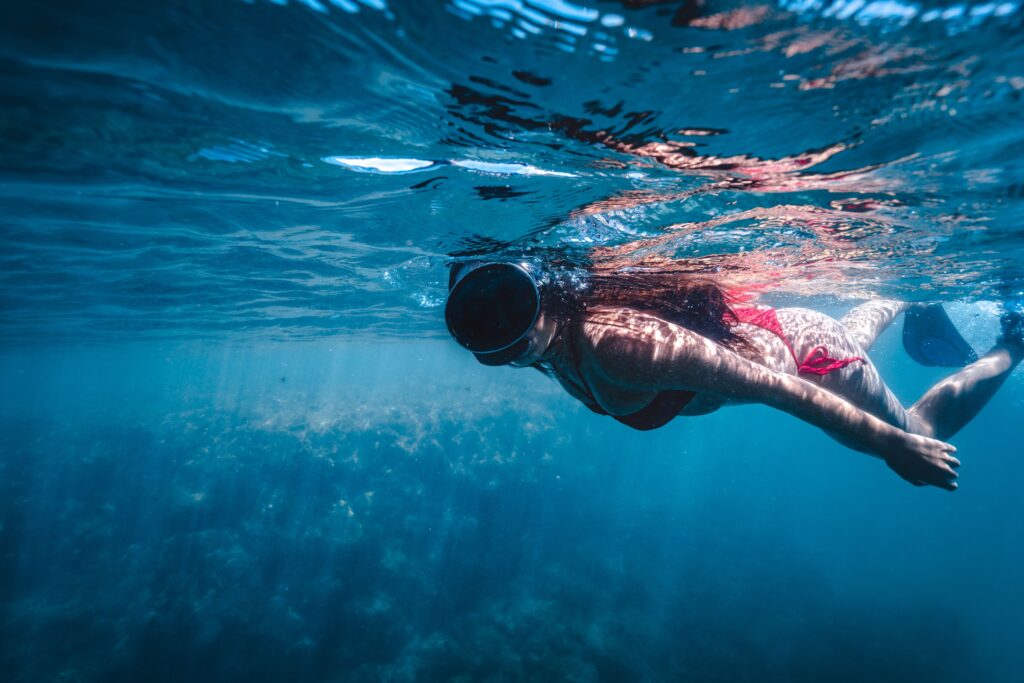
For many visitors, this is the moment they’ve been waiting for.
The moment when you look into the Mediterranean and realise just how clear the water can be.
Tabarca’s protected marine environment makes it one of the Costa Blanca’s most appealing places for snorkelling.
Discover the Main Beach
Tabarca’s main beach lies near the narrow section of land connecting the historic village with the more open eastern part of the island.
It has a mixture of sand and gravel, and is a popular place for swimming and relaxing.
During the summer, the beach can become busy, particularly when day-trip boats arrive.
But its setting is beautiful.
The sea stretches out on either side of the island, and the historic buildings create an unusual backdrop for a beach day.
It’s a good choice if you prefer a more conventional swimming area.
Explore the Rocky Coves
Beyond the main beach, Tabarca has rocky stretches of coastline and smaller coves.
These places can offer excellent views into the water when conditions are calm.
Bring a snorkelling mask, and you may spot fish moving between rocks and seagrass.
The underwater environment is part of a protected marine reserve, so visitors must respect its rules.
Snorkelling without a permit is generally allowed in designated inner waters, but scuba diving is regulated and requires authorisation.
Avoid entering restricted areas, and check current local guidance.
What Can You See Underwater?
Tabarca’s marine habitats support a wide variety of Mediterranean species.
Depending on conditions and location, snorkellers may see fish such as sea bream, along with other marine life associated with rocky seabeds and Posidonia meadows.
Sightings are never guaranteed.
The pleasure is in discovering what’s there naturally, without disturbing the environment.
Snorkelling Safety
The water may look inviting, but the Mediterranean can change quickly.
Avoid snorkelling when the sea is rough, visibility is poor, or currents are strong.
Use suitable flotation equipment, stay aware of boats, and never swim beyond your ability.
Don’t touch marine animals, remove starfish, feed fish, or damage the seagrass.
The island’s underwater beauty depends on visitors helping to protect it.
Why visit: Tabarca offers one of the most distinctive marine experiences near Alicante.
Best for: Confident swimmers, snorkelling enthusiasts, and visitors who love clear Mediterranean water.
Good to know: Some rocky entries are slippery, and sea urchins may be present. Water shoes can be useful.
Local tip: Bring your own snorkelling mask if you have one, so you’re not dependent on equipment availability on the island.
Before entering the water, check the official Tabarca snorkelling guide for marine reserve regulations, recommended areas, and environmental guidance.
4. Walk to the Lighthouse and Discover the Island’s Wild Side
Most visitors naturally gravitate towards the village and main beach.
But Tabarca has another side.
Beyond the historic settlement lies a more open landscape, with low vegetation, rocky shores, and uninterrupted views across the Mediterranean.
This is where the island begins to feel wonderfully remote.
The Tabarca Lighthouse
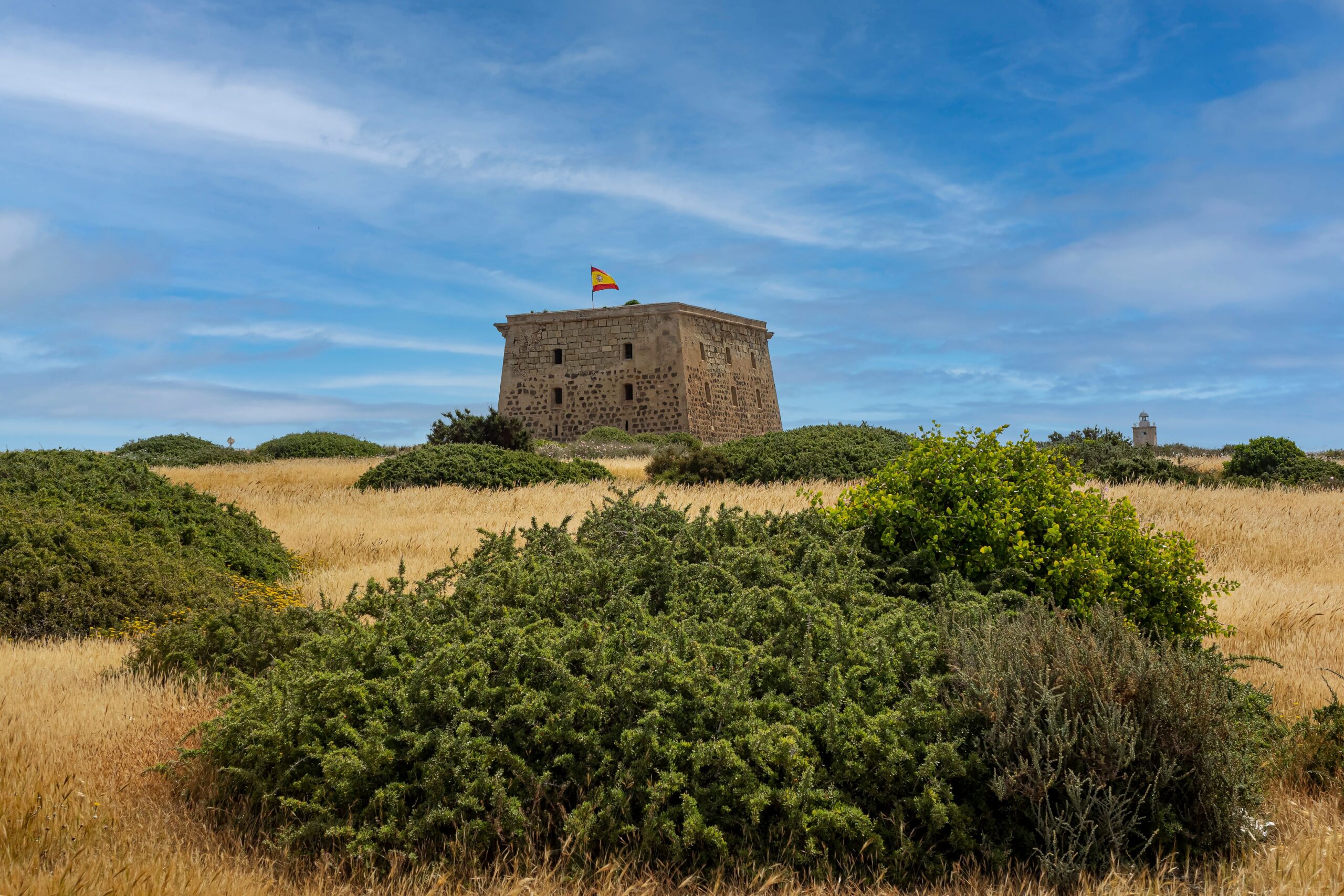
One of the island’s most recognisable landmarks is its nineteenth-century lighthouse.
Standing in the more open eastern part of Tabarca, it reflects the island’s long connection with maritime navigation.
The walk towards it is an excellent way to escape the busiest areas.
Instead of restaurants and village streets, you’ll find open skies, coastal scenery, and the sound of the wind moving across the landscape.
The lighthouse is a landmark to admire from permitted public areas, rather than an attraction where interior access should be assumed.
Torre de San José
Another fascinating structure is the Torre de San José.
Built in the eighteenth century, this defensive tower was part of the island’s fortified landscape.
It also served other purposes during its history, including use as a prison.
Its imposing appearance is a striking contrast to the relaxed holiday atmosphere found around the harbour.
It’s a reminder that Tabarca was once a place of strategic importance.
The Beauty of the Open Coastline
As you explore, look out towards the horizon.
On a clear day, the coastline of the Costa Blanca is visible in the distance.
Closer to you, waves break against the rocks, seabirds move above the water, and the island’s natural landscape takes centre stage.
This is one of the best parts of Tabarca for travellers who enjoy walking and photography.
Why visit: Beautiful coastal scenery, historic landmarks, and a quieter side of the island.
Best for: Walkers, photographers, and visitors who enjoy exploring beyond the busiest attractions.
Good to know: There is limited shade in the open eastern area. Bring water, sun protection, and comfortable footwear.
Local tip: Walk towards the lighthouse earlier in the day, or when the afternoon temperature begins to ease.
5. Taste Tabarca’s Famous Seafood and Traditional Caldero
There’s something special about enjoying seafood on an island where fishing has shaped local life for generations.
After a morning of walking, swimming, and exploring, a relaxed Mediterranean lunch feels particularly rewarding.
And Tabarca has a dish you should know about.
Caldero Tabarquino
Caldero tabarquino is one of the island’s traditional specialities.
It’s a fish-based rice dish associated with Tabarca’s seafaring heritage.
The preparation centres on fish, a flavourful broth, and rice, although individual restaurants may have their own variations.
The result is a dish that reflects the island’s relationship with the Mediterranean.
If you enjoy local cuisine, this is one of the most memorable ways to experience Tabarca.
Enjoy a Leisurely Island Lunch
The historic village has restaurants serving seafood, rice dishes, and other Mediterranean favourites.
Some offer outdoor seating where you can enjoy the atmosphere while taking a break from sightseeing.
In the busy summer season, restaurants can fill quickly.
If there’s a particular place you’d like to try, booking ahead may be worthwhile.
And if you’re ordering a traditional rice dish, check whether it requires advance preparation or a minimum number of diners.
What About Budget Travellers?
You don’t have to book a long restaurant lunch to enjoy the island.
You can bring water and suitable snacks, or choose a simpler meal.
However, Tabarca is a small island, and options can be more limited outside the main tourist season.
Plan accordingly, particularly if you have dietary requirements.
Why visit: Traditional island cuisine is part of the Tabarca experience, not just a convenient lunch stop.
Best for: Food lovers, couples, and anyone who enjoys discovering regional Spanish dishes.
Local tip: Leave enough time for lunch before your return boat. Island meals are much more enjoyable when you’re not constantly watching the clock.
6. How to Get to Tabarca Island From Alicante
Getting to Tabarca is part of the adventure.
You can’t drive to the island.
The journey is made by boat, and the crossing gives you beautiful views of the Mediterranean coastline.
There are two main departure options for visitors staying around Alicante.
Boat From Alicante Port
Alicante offers seasonal and timetable-dependent passenger boat services to Tabarca.
The journey generally takes around one hour, depending on the vessel and sea conditions.
Departing directly from Alicante can be particularly convenient if you’re staying in the city centre, or visiting without a car.
You can enjoy the waterfront before departure, board your boat, and arrive on the island ready to explore.
However, sailing frequency changes throughout the year.
Services may be reduced outside the main tourist season, and departures can be affected by weather.
Always confirm the current schedule before planning your day.
Boat From Santa Pola
Santa Pola is another popular departure point.
Because it lies much closer to Tabarca, the boat journey is generally shorter than from Alicante.
Crossing times depend on the vessel, but many services take approximately 15 to 30 minutes.
This can be an excellent option if you’re staying south of Alicante, travelling by car, or prefer a shorter boat crossing.
Remember to account for the journey from Alicante to Santa Pola when comparing your options.
Alicante or Santa Pola: Which Is Better?
| Departure | Main advantage | Consideration |
|---|---|---|
| Alicante Port | Convenient for visitors staying in central Alicante | Longer crossing, and seasonal timetable variations |
| Santa Pola | Shorter boat crossing | Requires travelling to Santa Pola first |
The best option depends on where you’re staying, how much time you have, and the available sailings on your chosen date.
How Much Does the Ferry Cost?
Ticket prices vary by operator, season, departure point, and service type.
Rather than relying on a fixed price that may change, compare current return fares directly with boat operators.
Check whether the ticket includes a fixed return departure, or allows you to choose from several sailings.
That detail can make a big difference to your day.
Can You Visit Tabarca in Winter?
Yes, but planning is more important.
Boat services may be less frequent, restaurants may have reduced opening hours, and weather can affect crossings.
On the positive side, the island can feel much quieter outside the summer season.
If you enjoy peaceful walks and historic places, a winter visit can be rewarding when conditions allow.
Important: Never assume a return boat will be available at your preferred time. Confirm your return arrangements before leaving the mainland.
7. Plan the Perfect One-Day Tabarca Island Itinerary
Tabarca is small, but it’s easy to underestimate how quickly a day disappears when you’re enjoying the Mediterranean.
The secret is to combine a little sightseeing, some time by the water, and a relaxed lunch.
Here’s a flexible itinerary to help you make the most of your visit.
Morning: Arrive and Explore the Historic Village
Take a morning boat where available, and begin with the historic walled village.
Walk through the old gateways, explore the narrow streets, and discover the Church of San Pedro and San Pablo.
Allow time for photographs, and enjoy the atmosphere before the busiest part of the day.
Late Morning: Discover the Lighthouse and Coastal Landscape
Continue towards the more open part of the island.
Walk towards the lighthouse, admire Torre de San José from accessible areas, and enjoy the Mediterranean scenery.
Bring water, especially in warmer weather.
Lunchtime: Try Caldero Tabarquino
Return towards the village for lunch.
If you enjoy seafood, consider trying the traditional caldero.
Alternatively, choose another local dish and enjoy a relaxed break before the afternoon.
Afternoon: Swim, Snorkel, or Relax
Spend the afternoon by the water.
You could swim at the main beach, explore a suitable rocky cove, or snorkel in permitted areas if the conditions are safe.
If swimming isn’t your thing, simply find a peaceful place to enjoy the sea.
There’s no rule that says every island adventure needs to involve getting wet.
Before Departure: One Last Look at the Mediterranean
Make your way back towards the harbour with plenty of time to spare.
Check your boarding point, and confirm that you’re ready for your return boat.
Then take one last look around.
The little fishing harbour, the old stone buildings, and the Mediterranean stretching towards the mainland create a lovely final memory.
Combine Tabarca With a Private Alicante Sightseeing Tour
If you’re spending more than one day in Alicante, a wonderful approach is to give Tabarca its own day, and explore Alicante’s main landmarks on another.
Tour in Tuk Tuk Limo offers private electric tuk-tuk sightseeing experiences in Alicante.
A city tour can introduce you to the castle surroundings, historic districts, waterfront, and other accessible landmarks before or after your island adventure.
Tabarca itself is reached by boat and is not part of a tuk-tuk sightseeing route.
The two experiences complement each other beautifully.
One reveals the historic and cultural character of Alicante.
The other takes you out into the Mediterranean for a completely different adventure.
Esplorare Alicante’s private sightseeing tours, o plan your city experience.
Frequently Asked Questions About Tabarca Island
Is Tabarca Island worth visiting?
Yes. Tabarca is one of the most distinctive day trips from Alicante, combining clear Mediterranean water, a protected marine reserve, historic fortifications, and a traditional island village.
How do you get to Tabarca Island from Alicante?
You can take a passenger boat from Alicante Port when services are operating. Alternatively, travel to Santa Pola, where the crossing is generally shorter. Check current departure schedules and return arrangements before travelling.
How long is the boat from Alicante to Tabarca?
The journey from Alicante generally takes approximately one hour, depending on the operator, vessel, and sea conditions.
How long do you need on Tabarca Island?
Four to six hours on the island allows time for the historic village, coastal walks, lunch, and a swim. You can spend longer if you enjoy snorkelling and relaxing by the sea.
Can you swim at Tabarca Island?
Yes. Tabarca has a main beach and rocky coastal areas where swimming may be possible. Always assess sea conditions, follow local safety information, and use appropriate caution around rocks.
Is Tabarca good for snorkelling?
Yes. The island is famous for its protected marine environment and clear water. Snorkelling is permitted in appropriate areas, but visitors must respect marine reserve regulations and avoid disturbing wildlife.
Do you need to book the ferry to Tabarca?
Advance booking is advisable during busy periods, particularly summer weekends and holidays. Check each operator’s booking arrangements, timetable, and cancellation policy.
Can you stay overnight on Tabarca?
Yes. The island has limited accommodation options, including small hotels and guesthouses. Availability can be restricted, especially during peak season.
Is Tabarca Island expensive?
Costs depend on your boat ticket, restaurant choices, and whether you stay overnight. Walking through the village and enjoying public coastal areas doesn’t generally require an admission ticket.
Is Tabarca suitable for families?
Yes. Families can enjoy the boat trip, historic village, and beach. However, some rocky areas are uneven, shade can be limited, and children require close supervision near the sea.
When is the best time to visit Tabarca?
Late spring and early autumn are excellent for pleasant temperatures and exploring on foot. Summer is popular for swimming, but can be very busy. Outside the main season, check boat services and weather carefully.
Can you take a tuk-tuk to Tabarca Island?
No. Tabarca is reached by boat. A tuk-tuk sightseeing tour is a separate way to explore accessible attractions on the Alicante mainland.
A Little Island You’ll Never Forget
There are plenty of beautiful places along Spain’s Mediterranean coast.
But Tabarca has something that makes it feel different.
Perhaps it’s the boat journey, when the mainland slowly disappears behind you.
Perhaps it’s the feeling of walking through an old fortified gateway, knowing that generations of islanders passed through the same entrance.
Or perhaps it’s the moment you look down into the clear blue water and realise there’s an entire world beneath the surface.
Whatever it is, Tabarca leaves an impression.
It’s small enough to explore in a day, but memorable enough to make you wish you had a little longer.
So if you’re planning a holiday in Alicante, leave room for an island adventure.
Bring your camera, your swimming things, and your curiosity.
And discover a side of the Costa Blanca that feels a world away from the city.
When you’re ready to explore Alicante itself, discover the private electric tuk-tuk sightseeing experiences from Tuk Tuk Limo Tours.
Because sometimes, the best part of visiting Alicante is discovering what’s waiting just beyond its shores.
Ready to see it yourself?
Skip the tour bus. Our electric tuk-tuks take you through the streets, stories, and hidden corners that guidebooks miss.


