Madrid in One Day: The Perfect Sightseeing Itinerary
Quick Answer: If you have Madrid in one day, start at Puerta del Sol, explore Plaza Mayor and the Royal Palace, enjoy a traditional Spanish lunch, then spend the afternoon at the Prado Museum or Retiro Park. Finish with the atmosphere of Gran Vía or a sunset near the Temple of Debod. This itinerary combines Madrid’s most memorable landmarks with realistic travel times, opportunities to relax, and an optional private tuk-tuk tour to help you see more without rushing.
There’s a particular kind of excitement that comes with arriving in Madrid for the first time.
You step outside, and the city is already happening around you.
People are hurrying towards work, café terraces are filling, delivery vans are squeezing through narrow streets, and somewhere nearby, the smell of freshly baked bread drifts through an open doorway.
You have one day.
Just one.
And an entire capital city waiting to be discovered.
You could spend that day running between attractions, checking your phone every five minutes and worrying about what you’re missing.
Or you could do something better.
You could experience Madrid in a way that leaves you with memories rather than sore feet and a collection of hurried photographs.
Because the secret to seeing Madrid in one day isn’t squeezing in as many landmarks as possible.
It’s choosing the right ones, visiting them in a sensible order, and allowing enough time to enjoy what makes this city special.
Here’s how we’d spend 24 hours in Spain’s extraordinary capital.
Madrid in One Day: Your Itinerary at a Glance
This route is designed for first-time visitors staying in or arriving near central Madrid.
It begins in the historic heart of the city, moves through the royal quarter and gives you a choice between art and green space in the afternoon.
The suggested times are flexible rather than fixed reservations.
| Time | Experience |
|---|---|
| 9:00 AM | Breakfast near Puerta del Sol |
| 9:45 AM | Puerta del Sol and Plaza Mayor |
| 10:45 AM | Royal Palace and Almudena Cathedral |
| 12:30 PM | Lunch around La Latina |
| 2:00 PM | Prado Museum or Retiro Park |
| 4:30 PM | Cibeles and Gran Vía |
| Early evening | Temple of Debod or a relaxed city-centre stroll |
| 8:30 PM onwards | Dinner and Madrid after dark |
This is an ambitious but manageable sightseeing outline if you focus on the exterior of the Royal Palace. If you plan to tour the palace’s interior, allow approximately another hour or more and remove another stop.
You don’t need to complete every activity.
The best day in Madrid is the one you actually enjoy.
1. 9:00 AM: Start Your Day Like Madrid Does
Before palaces, museums and famous squares, begin with something simple.
Breakfast.
Find a café around the historic centre and order a coffee, a tostada with tomato and olive oil, or something sweet if you prefer.
Spanish breakfasts are often relatively straightforward, especially compared with the enormous hotel buffets that many visitors are accustomed to.
And there’s something lovely about beginning your day among people who aren’t on holiday.
Office workers stop for a quick coffee.
Friends exchange a few words.
The waiter seems to know half the people coming through the door.
You’re not standing in front of a monument yet.
But you’re already experiencing Madrid.
9:45 AM: Puerta del Sol
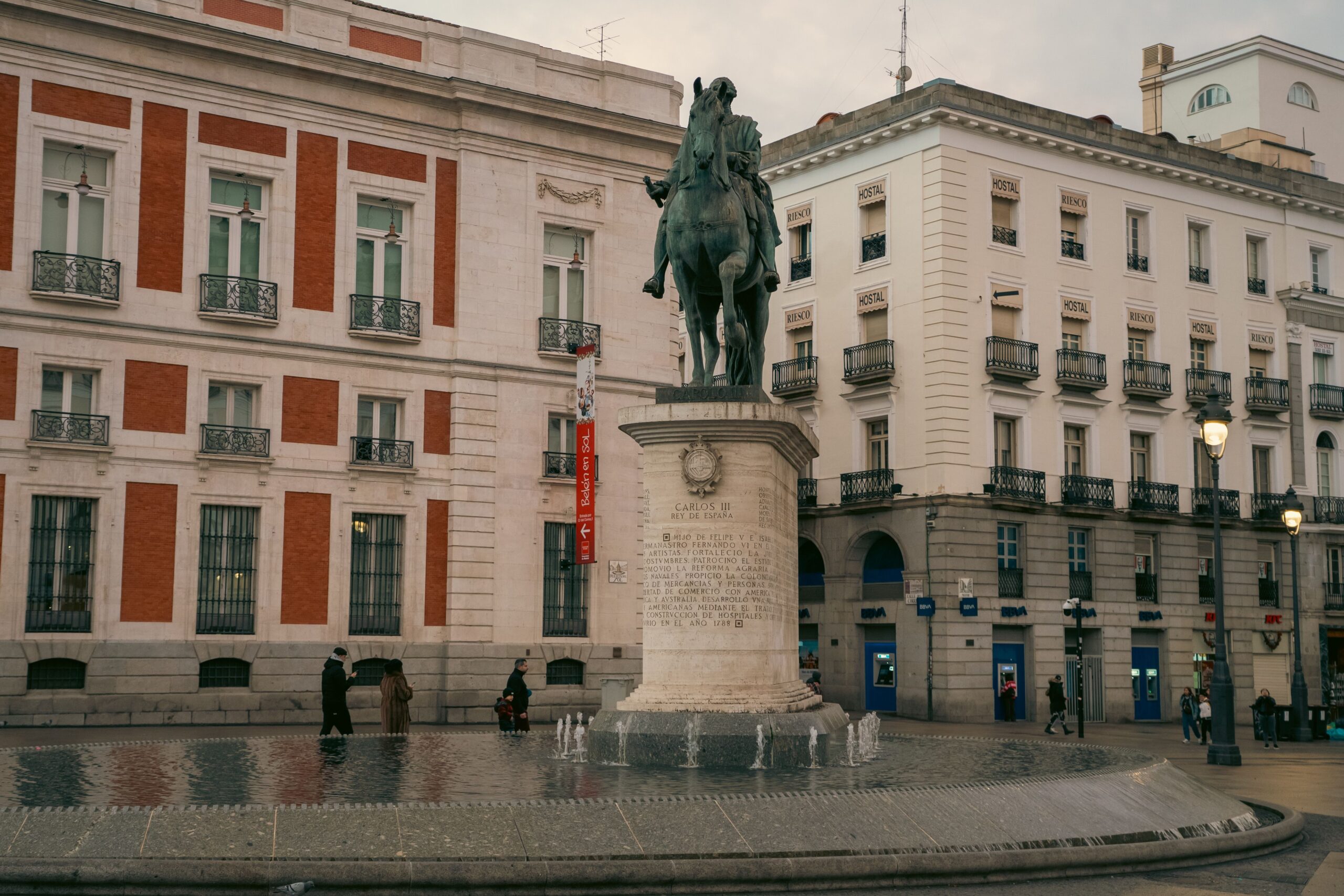
Make your way to Puerta del Sol, one of the city’s best-known meeting places.
Here you’ll find the famous Bear and Strawberry Tree statue, a symbol of Madrid, and the Kilometre Zero plaque marking the symbolic starting point of Spain’s radial road network.
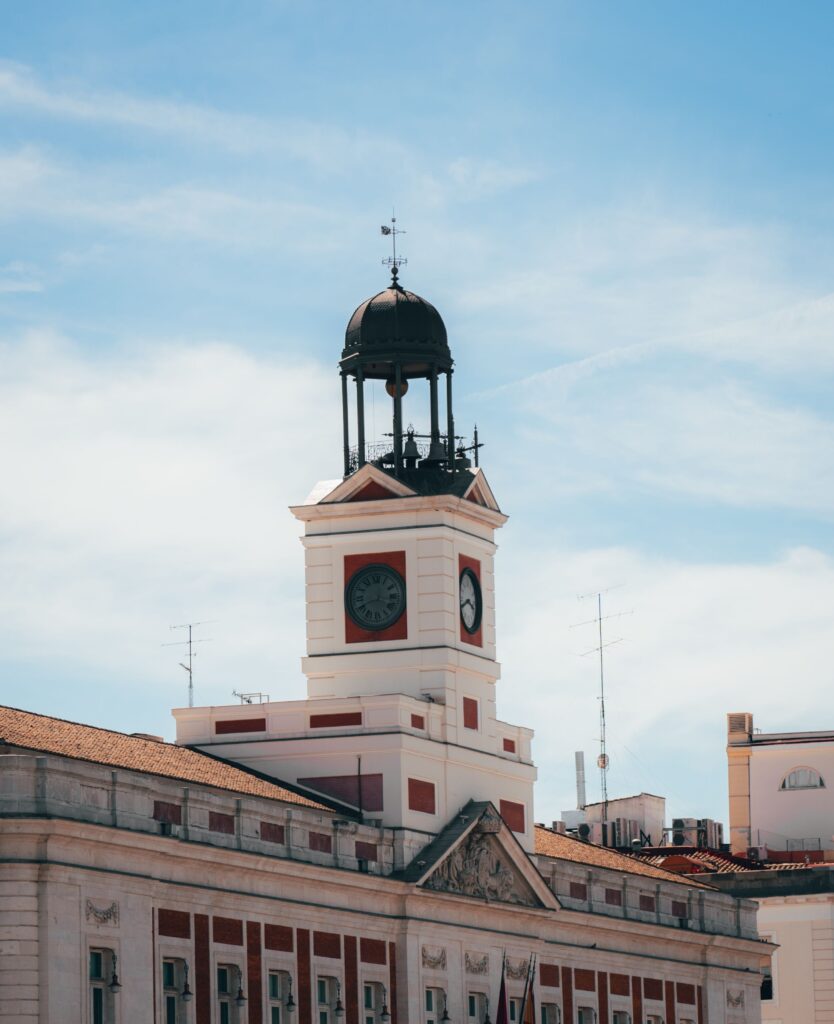
The clock on the Real Casa de Correos is also famous throughout Spain for its New Year’s Eve celebrations.
But what makes Sol interesting isn’t just its landmarks.
It’s the movement.
People arriving from every direction.
The constant conversations.
The feeling that the whole city somehow passes through this square.
Spend fifteen or twenty minutes here, take a few photographs, and then continue towards Plaza Mayor.
10:15 AM: Plaza Mayor
A short walk through the surrounding streets brings you to Plaza Mayor.
And suddenly, the city opens up.
The square is enclosed by elegant buildings, with covered arcades running around its edges and a statue of King Philip III at its centre.
Its history stretches back centuries, but it still feels very much alive.
Walk beneath the arches.
Look up at the painted façade of the Casa de la Panadería.
Then step into one of the narrow streets leading away from the square.
If you’re hungry, this area is associated with Madrid’s traditional bocadillo de calamares, a crusty bread roll filled with fried squid.
You don’t have to try one at ten in the morning.
But it’s worth knowing where to find one later.
Our advice: Don’t spend your entire morning in Sol and Plaza Mayor. They’re wonderful introductions, but the royal quarter is waiting just a short walk away.
2. 10:45 AM: Discover Madrid’s Royal Quarter
From Plaza Mayor, walk towards the Royal Palace.
On the way, you’ll pass through part of Madrid de los Austrias, the historic Habsburg quarter.
These streets have a different rhythm from the broad avenues of modern Madrid.
Buildings sit close together.
Small squares appear unexpectedly.
Old churches and traditional taverns share the same neighbourhood.
It’s one of the most rewarding parts of the city to explore on foot.
The Royal Palace of Madrid
When you reach the Royal Palace, take a moment to appreciate its scale.
The building occupies the site of Madrid’s former Alcázar, which was destroyed by fire in 1734.
Construction of the present palace began in 1738, and King Charles III became the first monarch to live there.
Today, it remains an official royal residence used for state occasions, although the royal family does not live there day to day.
The palace’s enormous stone façade, formal surroundings and views towards the west make it one of Madrid’s essential sights.
Should you go inside?
If royal history and architecture are your main interests, absolutely consider it.
But if you only have one day and want to see several different sides of Madrid, exploring the exterior may be the more practical choice.
An interior visit requires a ticket, security procedures, and time to appreciate the rooms.
If you decide to enter, book ahead through the official Royal Palace website and adjust the rest of your itinerary.
Cattedrale di Almudena
Directly opposite the palace stands Almudena Cathedral.
Its striking architecture reflects a long construction history, with work beginning in the nineteenth century and the cathedral finally consecrated in 1993.
The contrast between palace and cathedral is part of what makes this area so memorable.
You can stand in one place and appreciate two monumental buildings with very different stories.
Before leaving, look for the Mirador de la Cornisa viewpoint between the palace and cathedral area.
On a clear day, the views westward provide a welcome reminder that Madrid isn’t only buildings and busy streets.
Allow: Around 60 to 90 minutes for a relaxed exterior visit to the royal quarter. Add more time if entering the palace.
3. 12:30 PM: Lunch in La Latina
By now, you’ve earned a proper break.
Rather than grabbing something quickly while walking to the next attraction, head towards La Latina.
This historic neighbourhood is known for its traditional bars, narrow streets and lively atmosphere.
It’s an excellent place to discover the social side of Madrid.
You might order a tortilla española.
A plate of croquetas.
Some patatas bravas.
Or a selection of tapas to share.
There’s no need to turn lunch into another sightseeing mission.
Choose somewhere that appeals to you.
Sit down.
Enjoy the food.
Watch the people around you.
Madrid has a wonderfully relaxed relationship with the pleasure of eating, and visitors often discover that their favourite memories involve a table rather than a monument.
A little local advice
Lunch in Spain is traditionally later than in some northern European countries.
Many restaurants begin their main lunch service around 1:00 PM or later.
If you’re ready to eat at 12:30, look for a bar or restaurant already serving food rather than assuming every kitchen will be open.
Allow at least an hour if possible.
A good Madrid itinerary should have room for lunch to feel like lunch.
Not a pit stop.
4. 2:00 PM: Choose Between World-Class Art and Beautiful Gardens
This is where we recommend making a decision.
Not trying to do everything.
You have two excellent options, and either can become the highlight of your afternoon.
Option A: The Prado Museum
If you love art, head towards the Museo del Prado.
The museum holds one of the world’s great collections of European painting, including masterpieces by Velázquez, Goya, El Greco, Rubens and Titian.
Even people who don’t normally spend much time in museums can find something extraordinary here.
Velázquez’s Las Meninas is one of the collection’s most celebrated works.
But the Prado is too important to rush through simply so you can say you’ve visited.
Choose a few artists or galleries that genuinely interest you.
Give yourself approximately two hours.
And let the paintings speak for themselves.
Important: The Prado normally opens at 10:00 AM, but opening hours, exhibitions, and ticket availability should be checked on the official Prado website.
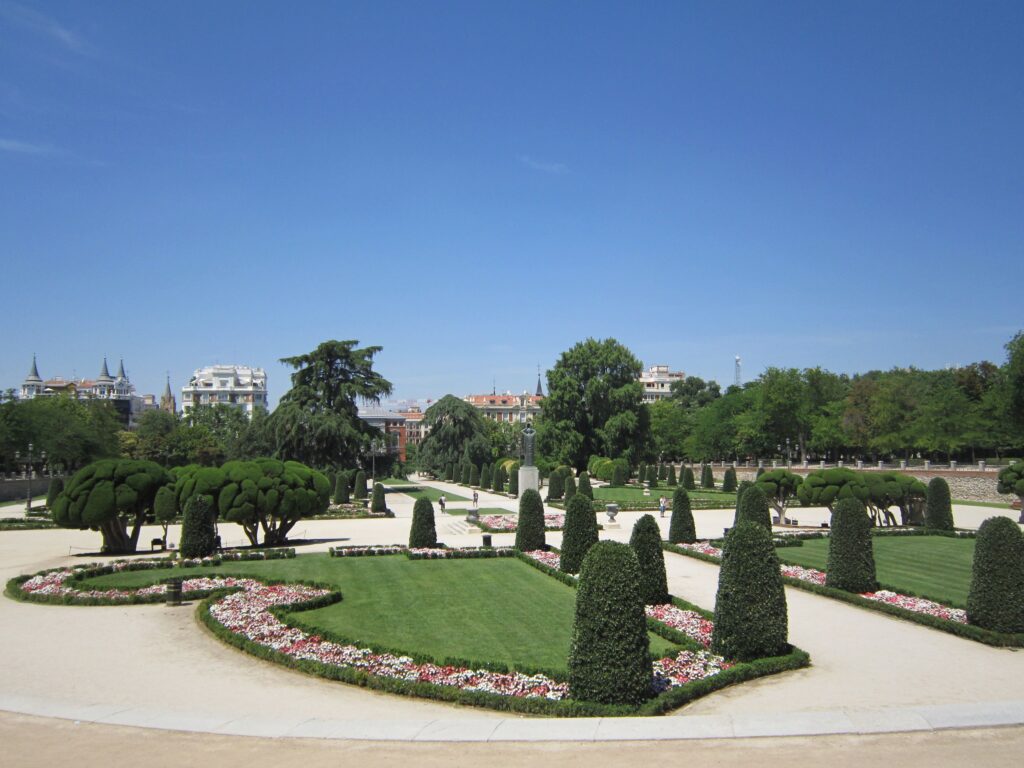
Option B: Retiro Park
If you’d rather spend your afternoon outdoors, choose El Retiro.
This beautiful park offers a completely different experience from the busy historic centre.
Tree-lined paths.
Gardens.
A large ornamental lake.
People reading, walking and enjoying the afternoon.
Retiro is part of Madrid’s UNESCO-listed Landscape of Light, recognised for the historic relationship between art, science and nature in the Paseo del Prado and Buen Retiro area.
But you don’t need a history lesson to appreciate it.
You can simply walk.
Find a shaded bench.
Enjoy the atmosphere.
And let the city slow down around you.
Our recommendation: Choose the Prado if art is a major reason for your visit. Choose Retiro if you want a more relaxed afternoon, particularly when travelling with children or after a busy morning.
Trying to visit both properly in one afternoon is possible only if you significantly shorten one experience.
For a one-day itinerary, it’s better to enjoy one than rush through two.
5. 4:30 PM: Discover Madrid’s Grand Boulevards
After your museum or park visit, make your way towards Plaza de Cibeles.
This is where Madrid begins to feel especially grand.
Plaza de Cibeles
At the centre of the square stands the famous Cibeles Fountain.
Behind it rises the magnificent Palacio de Cibeles, an architectural landmark that has become one of the city’s most recognisable buildings.
The surrounding avenues are broad and imposing, with beautiful façades that reward anyone who remembers to look upwards.
This is an excellent place for photographs.
Just make sure to use the pedestrian crossings and designated viewing areas.
Gran Vía
From Cibeles, continue towards Gran Vía.
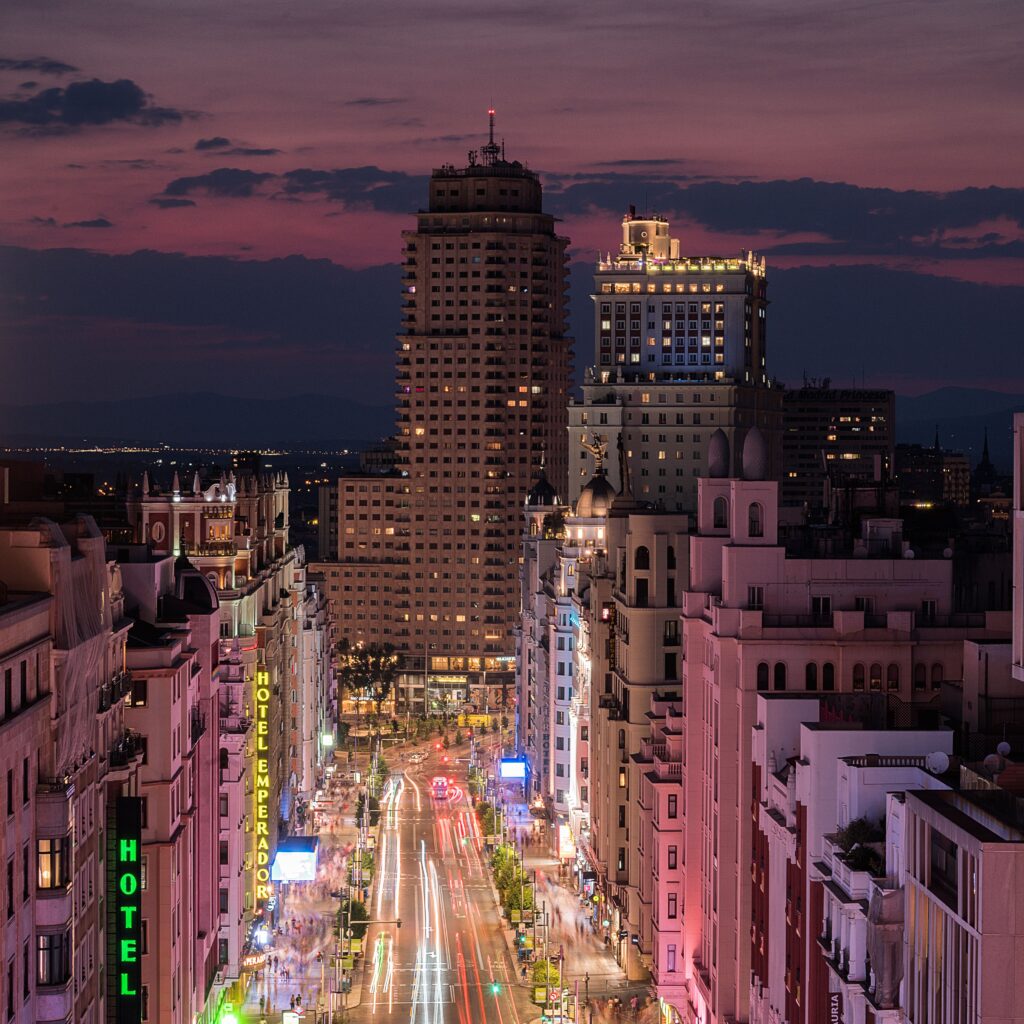
If the historic centre feels intimate and centuries-old, Gran Vía is Madrid showing off.
Grand buildings line the avenue.
Shops, theatres and hotels compete for attention.
The pavements are busy, and the architectural details above street level are extraordinary.
It’s one of those streets where the atmosphere changes throughout the day.
In the morning, it feels commercial.
By late afternoon, it becomes theatrical.
And at night, with the buildings illuminated, it has an energy entirely its own.
If your feet are beginning to complain, this is also a good point to stop for a drink or take advantage of Madrid’s public transport network.
There’s no prize for walking until you’re exhausted.
6. Early Evening: Watch Madrid Change Colour
There’s something special about Madrid as the sun begins to drop.
The light softens.
The buildings glow.
The city seems to become even more social.
And if you have the energy, there’s one final place worth considering.
Temple of Debod
Near Plaza de España stands the Temple of Debod, an ancient Egyptian temple reconstructed in Madrid.
The temple was given to Spain by Egypt in recognition of Spanish assistance with the international campaign to save monuments threatened by the construction of the Aswan High Dam.
It opened to the public in Madrid in 1972.
Today, the surrounding gardens are among the city’s best-known sunset spots.
The atmosphere can be wonderful.
People gather to enjoy the view.
The sky changes colour.
And the city spreads out beyond the park.
But there’s one important thing to remember.
Sunset time changes throughout the year.
In winter, sunset can come much earlier than visitors expect.
In summer, you may have several more hours of daylight.
So don’t treat this as a fixed 7:00 PM stop.
Check the sunset time for your travel date and adjust your afternoon accordingly.
If sunset has already passed or you’re tired, there’s no reason to force the visit.
A relaxed evening on Gran Vía or in the historic centre can be just as enjoyable.
7. 8:30 PM: Finish With Dinner and Madrid After Dark
After a full day of sightseeing, dinner should feel like a reward.
Not another item on your itinerary.
You could return to La Latina for traditional Spanish food.
Explore the restaurants around Barrio de las Letras.
Or simply choose somewhere near your hotel and enjoy the evening atmosphere.
Madrid is a city that comes alive after dark.
People gather on terraces.
Restaurants fill.
Friends meet for long conversations.
And the streets often remain lively well into the evening.
If you’re visiting for the first time, it’s worth experiencing this side of the city.
Order something you haven’t tried before.
Take your time.
And think back over everything you’ve seen.
The royal quarter.
The historic squares.
The art or gardens.
The grand boulevards.
The changing light.
You may have only spent one day in Madrid.
But you’ve experienced several different versions of the city.
And that’s what makes the day worthwhile.
Can You Really See Madrid in One Day?
Yes.
But there’s an important difference between seeing Madrid and experiencing every attraction.
In one day, you can enjoy the historic centre, admire major landmarks, visit one significant museum or park, and experience the city’s food and evening atmosphere.
What you can’t realistically do is explore every museum, enter every monument, and discover every neighbourhood.
That’s why planning matters.
Three things make the biggest difference:
- Group nearby attractions together. Sol, Plaza Mayor and the Royal Palace make a sensible morning route.
- Choose your priorities. If the Prado matters more than shopping, give it the time it deserves.
- Don’t underestimate the walking. Madrid’s centre is walkable, but the distances add up throughout a full day.
A guided sightseeing experience can also help, particularly if you want to see more of the city’s major landmarks without spending hours navigating unfamiliar streets.
Where Tuk Tuk Limo Tours Fits: A Smarter Way to See Madrid
At Tour in Tuk Tuk Limo, we know that not everyone arrives in Madrid with three or four days to explore.
Sometimes you have a single afternoon.
A long layover with enough time to leave the airport.
A weekend with a packed schedule.
Or just one precious day before travelling somewhere else.
That’s why our private electric tuk-tuk tours are designed to help you discover the city efficiently, comfortably and personally.
Rather than spending your first hours trying to work out where everything is, you can enjoy a guided introduction to Madrid’s landmarks and neighbourhoods.
Our local driver-guides share stories, point out places worth returning to and help you understand how the city fits together.
Which tour works best for a one-day visit?
Highlights Tour Madrid, 60 minutes
Ideal for travellers with a tight schedule.
This private tour introduces major landmarks including the Royal Palace, Plaza de Oriente, Gran Vía, Cibeles and Puerta de Alcalá.
It’s a useful way to get your bearings before exploring independently.
Welcome Tour of Madrid, 120 minutes
Our most popular Madrid experience.
Two hours combining famous landmarks, historic streets, viewpoints and lesser-known corners.
For first-time visitors, this is a particularly good way to begin the day or enjoy a broader introduction before deciding where to spend the rest of your time.
Discover Historic Madrid, 90 minutes
A slower journey through the older city, including its royal quarter, historic streets and architectural heritage.
Perfect for travellers who enjoy stories and history.
Complete Overview Tour, 180 minutes
A more extensive sightseeing experience for visitors who want a broader guided introduction, with time built into the route for photographs and a coffee stop.
All our Madrid tours are private, use electric tuk-tuks, and accommodate up to six guests per vehicle.
Routes and stopping opportunities depend on the selected tour and local conditions. Museum admission and extended interior visits are not part of a standard sightseeing drive.
You can explore the current routes, prices, and availability on our Madrid tour booking page.
How we’d combine a tuk-tuk tour with one day in Madrid
If this is your first visit, consider taking a morning sightseeing tour.
You’ll get a feel for the city’s layout, see several major landmarks and discover which places interest you most.
Then spend the rest of the day exploring your favourites on foot.
Perhaps you’ll return to the Royal Palace.
Perhaps you’ll spend two hours at the Prado.
Or perhaps you’ll discover a neighbourhood you hadn’t even considered visiting.
That’s the beauty of a good introduction.
It doesn’t replace your own adventure.
It helps you make more of it.
Frequently Asked Questions
Is Madrid in one day enough?
Madrid in one day is enough to experience many of the city’s most famous landmarks, explore the historic centre and enjoy its food and atmosphere. However, you’ll need to prioritise rather than trying to visit every attraction.
What should I see in Madrid if I only have one day?
Start with Puerta del Sol, Plaza Mayor and the Royal Palace area. Then choose between the Prado Museum and Retiro Park, explore Gran Vía and finish with dinner or a sunset viewpoint.
Can you walk around Madrid in one day?
You can walk between many central attractions, but a full day of sightseeing may involve several kilometres. Comfortable shoes, regular breaks and public transport can make the experience more enjoyable.
Is the Royal Palace worth visiting if I only have one day?
Yes, especially if you enjoy architecture and royal history. If you’re short on time, admiring the exterior and surrounding squares is worthwhile. An interior visit requires additional time and advance planning.
Is the Prado Museum worth visiting on a short trip?
Absolutely, particularly for art lovers. However, allow at least two hours for a focused visit rather than trying to see the entire collection in a hurry.
What is the best way to see Madrid in a short time?
A combination of walking, public transport, and a guided sightseeing experience works well. A private tuk-tuk tour can help you see major landmarks efficiently while learning about the city from a local driver-guide.
Is Madrid better during the day or at night?
Both offer different experiences. Daytime is ideal for monuments, museums and parks, while evenings reveal Madrid’s lively restaurants, terraces and illuminated streets.
What is the best time to visit Madrid?
Spring and autumn are often comfortable for sightseeing. Summer afternoons can be very hot, while winter brings cooler temperatures and earlier sunsets. Madrid remains a rewarding destination throughout the year.
One Day in Madrid Can Stay With You for Years
By the end of your day, your camera roll will probably be full.
Photographs of palaces.
Historic squares.
Beautiful buildings.
Perhaps a sunset.
Perhaps a plate of food you can’t quite remember how to pronounce.
But the photographs won’t capture everything.
They won’t capture the sound of Madrid waking up.
The feeling of stepping into Plaza Mayor for the first time.
The quiet moment beneath the trees in Retiro.
Or the warmth of the evening as the city begins another night.
Those are the things that stay with you.
And they’re the reason we believe a great day in Madrid shouldn’t be measured by how many attractions you manage to squeeze in.
It should be measured by how much of the city you actually experience.
So plan your route.
Choose the places that excite you.
Leave room for something unexpected.
And if you’d like a local to show you the city before you set off on your own adventure, we’d love to welcome you aboard.
Explore private Madrid tuk-tuk tours with Tuk Tuk Limo Tours.
One day. One extraordinary city. Memories worth bringing home.Madrid in One Day: The Perfect Sightseeing Itinerary
Quick Answer: If you have Madrid in one day, start at Puerta del Sol, explore Plaza Mayor and the Royal Palace, enjoy a traditional Spanish lunch, then spend the afternoon at the Prado Museum or Retiro Park. Finish with the atmosphere of Gran Vía or a sunset near the Temple of Debod. This itinerary combines Madrid’s most memorable landmarks with realistic travel times, opportunities to relax and an optional private tuk-tuk tour to help you see more without rushing.
There’s a particular kind of excitement that comes with arriving in Madrid for the first time.
You step outside and the city is already happening around you.
People are hurrying towards work, café terraces are filling, delivery vans are squeezing through narrow streets, and somewhere nearby, the smell of freshly baked bread drifts through an open doorway.
You have one day.
Just one.
And an entire capital city waiting to be discovered.
You could spend that day running between attractions, checking your phone every five minutes and worrying about what you’re missing.
Or you could do something better.
You could experience Madrid in a way that leaves you with memories rather than sore feet and a collection of hurried photographs.
Because the secret to seeing Madrid in one day isn’t squeezing in as many landmarks as possible.
It’s choosing the right ones, visiting them in a sensible order, and allowing enough time to enjoy what makes this city special.
Here’s how we’d spend 24 hours in Spain’s extraordinary capital.
Madrid in One Day: Your Itinerary at a Glance
This route is designed for first-time visitors staying in or arriving near central Madrid.
It begins in the historic heart of the city, moves through the royal quarter and gives you a choice between art and green space in the afternoon.
The suggested times are flexible rather than fixed reservations.
| Time | Experience |
|---|---|
| 9:00 AM | Breakfast near Puerta del Sol |
| 9:45 AM | Puerta del Sol and Plaza Mayor |
| 10:45 AM | Royal Palace and Almudena Cathedral |
| 12:30 PM | Lunch around La Latina |
| 2:00 PM | Prado Museum or Retiro Park |
| 4:30 PM | Cibeles and Gran Vía |
| Early evening | Temple of Debod or a relaxed city-centre stroll |
| 8:30 PM onwards | Dinner and Madrid after dark |
This is an ambitious but manageable sightseeing outline if you focus on the exterior of the Royal Palace. If you plan to tour the palace’s interior, allow approximately another hour or more and remove another stop.
You don’t need to complete every activity.
The best day in Madrid is the one you actually enjoy.
1. 9:00 AM: Start Your Day Like Madrid Does
Before palaces, museums and famous squares, begin with something simple.
Breakfast.
Find a café around the historic centre and order a coffee, a tostada with tomato and olive oil, or something sweet if you prefer.
Spanish breakfasts are often relatively straightforward, especially compared with the enormous hotel buffets that many visitors are accustomed to.
And there’s something lovely about beginning your day among people who aren’t on holiday.
Office workers stop for a quick coffee.
Friends exchange a few words.
The waiter seems to know half the people coming through the door.
You’re not standing in front of a monument yet.
But you’re already experiencing Madrid.
9:45 AM: Puerta del Sol
Make your way to Puerta del Sol, one of the city’s best-known meeting places.
Here you’ll find the famous Bear and Strawberry Tree statue, a symbol of Madrid, and the Kilometre Zero plaque marking the symbolic starting point of Spain’s radial road network.
The clock on the Real Casa de Correos is also famous throughout Spain for its New Year’s Eve celebrations.
But what makes Sol interesting isn’t just its landmarks.
It’s the movement.
People arriving from every direction.
The constant conversations.
The feeling that the whole city somehow passes through this square.
Spend fifteen or twenty minutes here, take a few photographs, and then continue towards Plaza Mayor.
10:15 AM: Plaza Mayor
A short walk through the surrounding streets brings you to Plaza Mayor.
And suddenly, the city opens up.
The square is enclosed by elegant buildings, with covered arcades running around its edges and a statue of King Philip III at its centre.
Its history stretches back centuries, but it still feels very much alive.
Walk beneath the arches.
Look up at the painted façade of the Casa de la Panadería.
Then step into one of the narrow streets leading away from the square.
If you’re hungry, this area is associated with Madrid’s traditional bocadillo de calamares, a crusty bread roll filled with fried squid.
You don’t have to try one at ten in the morning.
But it’s worth knowing where to find one later.
Our advice: Don’t spend your entire morning in Sol and Plaza Mayor. They’re wonderful introductions, but the royal quarter is waiting just a short walk away.
2. 10:45 AM: Discover Madrid’s Royal Quarter
From Plaza Mayor, walk towards the Royal Palace.
On the way, you’ll pass through part of Madrid de los Austrias, the historic Habsburg quarter.
These streets have a different rhythm from the broad avenues of modern Madrid.
Buildings sit close together.
Small squares appear unexpectedly.
Old churches and traditional taverns share the same neighbourhood.
It’s one of the most rewarding parts of the city to explore on foot.
The Royal Palace of Madrid
When you reach the Royal Palace, take a moment to appreciate its scale.
The building occupies the site of Madrid’s former Alcázar, which was destroyed by fire in 1734.
Construction of the present palace began in 1738, and King Charles III became the first monarch to live there.
Today, it remains an official royal residence used for state occasions, although the royal family does not live there day to day.
The palace’s enormous stone façade, formal surroundings and views towards the west make it one of Madrid’s essential sights.
Should you go inside?
If royal history and architecture are your main interests, absolutely consider it.
But if you only have one day and want to see several different sides of Madrid, exploring the exterior may be the more practical choice.
An interior visit requires a ticket, security procedures and time to appreciate the rooms.
If you decide to enter, book ahead through the official Royal Palace website and adjust the rest of your itinerary.
Cattedrale di Almudena
Directly opposite the palace stands Almudena Cathedral.
Its striking architecture reflects a long construction history, with work beginning in the nineteenth century and the cathedral finally consecrated in 1993.
The contrast between palace and cathedral is part of what makes this area so memorable.
You can stand in one place and appreciate two monumental buildings with very different stories.
Before leaving, look for the Mirador de la Cornisa viewpoint between the palace and cathedral area.
On a clear day, the views westward provide a welcome reminder that Madrid isn’t only buildings and busy streets.
Allow: Around 60 to 90 minutes for a relaxed exterior visit to the royal quarter. Add more time if entering the palace.
3. 12:30 PM: Lunch in La Latina
By now, you’ve earned a proper break.
Rather than grabbing something quickly while walking to the next attraction, head towards La Latina.
This historic neighbourhood is known for its traditional bars, narrow streets and lively atmosphere.
It’s an excellent place to discover the social side of Madrid.
You might order a tortilla española.
A plate of croquetas.
Some patatas bravas.
Or a selection of tapas to share.
There’s no need to turn lunch into another sightseeing mission.
Choose somewhere that appeals to you.
Sit down.
Enjoy the food.
Watch the people around you.
Madrid has a wonderfully relaxed relationship with the pleasure of eating, and visitors often discover that their favourite memories involve a table rather than a monument.
A little local advice
Lunch in Spain is traditionally later than in some northern European countries.
Many restaurants begin their main lunch service around 1:00 PM or later.
If you’re ready to eat at 12:30, look for a bar or restaurant already serving food rather than assuming every kitchen will be open.
Allow at least an hour if possible.
A good Madrid itinerary should have room for lunch to feel like lunch.
Not a pit stop.
4. 2:00 PM: Choose Between World-Class Art and Beautiful Gardens
This is where we recommend making a decision.
Not trying to do everything.
You have two excellent options, and either can become the highlight of your afternoon.
Option A: The Prado Museum
If you love art, head towards the Museo del Prado.
The museum holds one of the world’s great collections of European painting, including masterpieces by Velázquez, Goya, El Greco, Rubens and Titian.
Even people who don’t normally spend much time in museums can find something extraordinary here.
Velázquez’s Las Meninas is one of the collection’s most celebrated works.
But the Prado is too important to rush through simply so you can say you’ve visited.
Choose a few artists or galleries that genuinely interest you.
Give yourself approximately two hours.
And let the paintings speak for themselves.
Important: The Prado normally opens at 10:00 AM, but opening hours, exhibitions, and ticket availability should be checked on the official Prado website.
Option B: Retiro Park
If you’d rather spend your afternoon outdoors, choose El Retiro.
This beautiful park offers a completely different experience from the busy historic centre.
Tree-lined paths.
Gardens.
A large ornamental lake.
People reading, walking and enjoying the afternoon.
Retiro is part of Madrid’s UNESCO-listed Landscape of Light, recognised for the historic relationship between art, science and nature in the Paseo del Prado and Buen Retiro area.
But you don’t need a history lesson to appreciate it.
You can simply walk.
Find a shaded bench.
Enjoy the atmosphere.
And let the city slow down around you.
Our recommendation: Choose the Prado if art is a major reason for your visit. Choose Retiro if you want a more relaxed afternoon, particularly when travelling with children or after a busy morning.
Trying to visit both properly in one afternoon is possible only if you significantly shorten one experience.
For a one-day itinerary, it’s better to enjoy one than rush through two.
5. 4:30 PM: Discover Madrid’s Grand Boulevards
After your museum or park visit, make your way towards Plaza de Cibeles.
This is where Madrid begins to feel especially grand.
Plaza de Cibeles
At the centre of the square stands the famous Cibeles Fountain.
Behind it rises the magnificent Palacio de Cibeles, an architectural landmark that has become one of the city’s most recognisable buildings.
The surrounding avenues are broad and imposing, with beautiful façades that reward anyone who remembers to look upwards.
This is an excellent place for photographs.
Just make sure to use the pedestrian crossings and designated viewing areas.
Gran Vía
From Cibeles, continue towards Gran Vía.
If the historic centre feels intimate and centuries-old, Gran Vía is Madrid showing off.
Grand buildings line the avenue.
Shops, theatres and hotels compete for attention.
The pavements are busy, and the architectural details above street level are extraordinary.
It’s one of those streets where the atmosphere changes throughout the day.
In the morning, it feels commercial.
By late afternoon, it becomes theatrical.
And at night, with the buildings illuminated, it has an energy entirely its own.
If your feet are beginning to complain, this is also a good point to stop for a drink or take advantage of Madrid’s public transport network.
There’s no prize for walking until you’re exhausted.
6. Early Evening: Watch Madrid Change Colour
There’s something special about Madrid as the sun begins to drop.
The light softens.
The buildings glow.
The city seems to become even more social.
And if you have the energy, there’s one final place worth considering.
Temple of Debod
Near Plaza de España stands the Temple of Debod, an ancient Egyptian temple reconstructed in Madrid.
The temple was given to Spain by Egypt in recognition of Spanish assistance with the international campaign to save monuments threatened by the construction of the Aswan High Dam.
It opened to the public in Madrid in 1972.
Today, the surrounding gardens are among the city’s best-known sunset spots.
The atmosphere can be wonderful.
People gather to enjoy the view.
The sky changes colour.
And the city spreads out beyond the park.
But there’s one important thing to remember.
Sunset time changes throughout the year.
In winter, sunset can come much earlier than visitors expect.
In summer, you may have several more hours of daylight.
So don’t treat this as a fixed 7:00 PM stop.
Check the sunset time for your travel date and adjust your afternoon accordingly.
If sunset has already passed or you’re tired, there’s no reason to force the visit.
A relaxed evening on Gran Vía or in the historic centre can be just as enjoyable.
7. 8:30 PM: Finish With Dinner and Madrid After Dark
After a full day of sightseeing, dinner should feel like a reward.
Not another item on your itinerary.
You could return to La Latina for traditional Spanish food.
Explore the restaurants around Barrio de las Letras.
Or simply choose somewhere near your hotel and enjoy the evening atmosphere.
Madrid is a city that comes alive after dark.
People gather on terraces.
Restaurants fill.
Friends meet for long conversations.
And the streets often remain lively well into the evening.
If you’re visiting for the first time, it’s worth experiencing this side of the city.
Order something you haven’t tried before.
Take your time.
And think back over everything you’ve seen.
The royal quarter.
The historic squares.
The art or gardens.
The grand boulevards.
The changing light.
You may have only spent one day in Madrid.
But you’ve experienced several different versions of the city.
And that’s what makes the day worthwhile.
Can You Really See Madrid in One Day?
Yes.
But there’s an important difference between seeing Madrid and experiencing every attraction.
In one day, you can enjoy the historic centre, admire major landmarks, visit one significant museum or park, and experience the city’s food and evening atmosphere.
What you can’t realistically do is explore every museum, enter every monument, and discover every neighbourhood.
That’s why planning matters.
Three things make the biggest difference:
- Group nearby attractions together. Sol, Plaza Mayor and the Royal Palace make a sensible morning route.
- Choose your priorities. If the Prado matters more than shopping, give it the time it deserves.
- Don’t underestimate the walking. Madrid’s centre is walkable, but the distances add up throughout a full day.
A guided sightseeing experience can also help, particularly if you want to see more of the city’s major landmarks without spending hours navigating unfamiliar streets.
Where Tuk Tuk Limo Tours Fits: A Smarter Way to See Madrid
At Tour in Tuk Tuk Limo, we know that not everyone arrives in Madrid with three or four days to explore.
Sometimes you have a single afternoon.
A long layover with enough time to leave the airport.
A weekend with a packed schedule.
Or just one precious day before travelling somewhere else.
That’s why our private electric tuk-tuk tours are designed to help you discover the city efficiently, comfortably and personally.
Rather than spending your first hours trying to work out where everything is, you can enjoy a guided introduction to Madrid’s landmarks and neighbourhoods.
Our local driver-guides share stories, point out places worth returning to and help you understand how the city fits together.
Which tour works best for a one-day visit?
Highlights Tour Madrid, 60 minutes
Ideal for travellers with a tight schedule.
This private tour introduces major landmarks including the Royal Palace, Plaza de Oriente, Gran Vía, Cibeles and Puerta de Alcalá.
It’s a useful way to get your bearings before exploring independently.
Welcome Tour of Madrid, 120 minutes
Our most popular Madrid experience.
Two hours combining famous landmarks, historic streets, viewpoints and lesser-known corners.
For first-time visitors, this is a particularly good way to begin the day or enjoy a broader introduction before deciding where to spend the rest of your time.
Discover Historic Madrid, 90 minutes
A slower journey through the older city, including its royal quarter, historic streets and architectural heritage.
Perfect for travellers who enjoy stories and history.
Complete Overview Tour, 180 minutes
A more extensive sightseeing experience for visitors who want a broader guided introduction, with time built into the route for photographs and a coffee stop.
All our Madrid tours are private, use electric tuk-tuks and accommodate up to six guests per vehicle.
Routes and stopping opportunities depend on the selected tour and local conditions. Museum admission and extended interior visits are not part of a standard sightseeing drive.
You can explore the current routes, prices and availability on our Madrid tour booking page.
How we’d combine a tuk-tuk tour with one day in Madrid
If this is your first visit, consider taking a morning sightseeing tour.
You’ll get a feel for the city’s layout, see several major landmarks and discover which places interest you most.
Then spend the rest of the day exploring your favourites on foot.
Perhaps you’ll return to the Royal Palace.
Perhaps you’ll spend two hours at the Prado.
Or perhaps you’ll discover a neighbourhood you hadn’t even considered visiting.
That’s the beauty of a good introduction.
It doesn’t replace your own adventure.
It helps you make more of it.
Frequently Asked Questions
Is Madrid in one day enough?
Madrid in one day is enough to experience many of the city’s most famous landmarks, explore the historic centre and enjoy its food and atmosphere. However, you’ll need to prioritise rather than trying to visit every attraction.
What should I see in Madrid if I only have one day?
Start with Puerta del Sol, Plaza Mayor and the Royal Palace area. Then choose between the Prado Museum and Retiro Park, explore Gran Vía and finish with dinner or a sunset viewpoint.
Can you walk around Madrid in one day?
You can walk between many central attractions, but a full day of sightseeing may involve several kilometres. Comfortable shoes, regular breaks and public transport can make the experience more enjoyable.
Is the Royal Palace worth visiting if I only have one day?
Yes, especially if you enjoy architecture and royal history. If you’re short on time, admiring the exterior and surrounding squares is worthwhile. An interior visit requires additional time and advance planning.
Is the Prado Museum worth visiting on a short trip?
Absolutely, particularly for art lovers. However, allow at least two hours for a focused visit rather than trying to see the entire collection in a hurry.
What is the best way to see Madrid in a short time?
A combination of walking, public transport, and a guided sightseeing experience works well. A private tuk-tuk tour can help you see major landmarks efficiently while learning about the city from a local driver-guide.
Is Madrid better during the day or at night?
Both offer different experiences. Daytime is ideal for monuments, museums and parks, while evenings reveal Madrid’s lively restaurants, terraces and illuminated streets.
What is the best time to visit Madrid?
Spring and autumn are often comfortable for sightseeing. Summer afternoons can be very hot, while winter brings cooler temperatures and earlier sunsets. Madrid remains a rewarding destination throughout the year.
One Day in Madrid Can Stay With You for Years
By the end of your day, your camera roll will probably be full.
Photographs of palaces.
Historic squares.
Beautiful buildings.
Perhaps a sunset.
Perhaps a plate of food you can’t quite remember how to pronounce.
But the photographs won’t capture everything.
They won’t capture the sound of Madrid waking up.
The feeling of stepping into Plaza Mayor for the first time.
The quiet moment beneath the trees in Retiro.
Or the warmth of the evening as the city begins another night.
Those are the things that stay with you.
And they’re the reason we believe a great day in Madrid shouldn’t be measured by how many attractions you manage to squeeze in.
It should be measured by how much of the city you actually experience.
So plan your route.
Choose the places that excite you.
Leave room for something unexpected.
And if you’d like a local to show you the city before you set off on your own adventure, we’d love to welcome you aboard.
Explore private Madrid tuk-tuk tours with Tuk Tuk Limo Tours.
One day. One extraordinary city. Memories worth bringing home.Quick Answer: If you have Madrid in one day, start at Puerta del Sol, explore Plaza Mayor and the Royal Palace, enjoy a traditional Spanish lunch, then spend the afternoon at the Prado Museum or Retiro Park. Finish with the atmosphere of Gran Vía or a sunset near the Temple of Debod. This itinerary combines Madrid’s most memorable landmarks with realistic travel times, opportunities to relax, and an optional private tuk-tuk tour to help you see more without rushing.
There’s a particular kind of excitement that comes with arriving in Madrid for the first time.
You step outside, and the city is already happening around you.
People are hurrying towards work, café terraces are filling, delivery vans are squeezing through narrow streets, and somewhere nearby, the smell of freshly baked bread drifts through an open doorway.
You have one day.
Just one.
And an entire capital city waiting to be discovered.
You could spend that day running between attractions, checking your phone every five minutes and worrying about what you’re missing.
Or you could do something better.
You could experience Madrid in a way that leaves you with memories rather than sore feet and a collection of hurried photographs.
Because the secret to seeing Madrid in one day isn’t squeezing in as many landmarks as possible.
It’s choosing the right ones, visiting them in a sensible order, and allowing enough time to enjoy what makes this city special.
Here’s how we’d spend 24 hours in Spain’s extraordinary capital.
Madrid in One Day: Your Itinerary at a Glance
This route is designed for first-time visitors staying in or arriving near central Madrid.
It begins in the historic heart of the city, moves through the royal quarter and gives you a choice between art and green space in the afternoon.
The suggested times are flexible rather than fixed reservations.
| Time | Experience |
|---|---|
| 9:00 AM | Breakfast near Puerta del Sol |
| 9:45 AM | Puerta del Sol and Plaza Mayor |
| 10:45 AM | Royal Palace and Almudena Cathedral |
| 12:30 PM | Lunch around La Latina |
| 2:00 PM | Prado Museum or Retiro Park |
| 4:30 PM | Cibeles and Gran Vía |
| Early evening | Temple of Debod or a relaxed city-centre stroll |
| 8:30 PM onwards | Dinner and Madrid after dark |
This is an ambitious but manageable sightseeing outline if you focus on the exterior of the Royal Palace. If you plan to tour the palace’s interior, allow approximately another hour or more and remove another stop.
You don’t need to complete every activity.
The best day in Madrid is the one you actually enjoy.
1. 9:00 AM: Start Your Day Like Madrid Does
Before palaces, museums and famous squares, begin with something simple.
Breakfast.
Find a café around the historic centre and order a coffee, a tostada with tomato and olive oil, or something sweet if you prefer.
Spanish breakfasts are often relatively straightforward, especially compared with the enormous hotel buffets that many visitors are accustomed to.
And there’s something lovely about beginning your day among people who aren’t on holiday.
Office workers stop for a quick coffee.
Friends exchange a few words.
The waiter seems to know half the people coming through the door.
You’re not standing in front of a monument yet.
But you’re already experiencing Madrid.
9:45 AM: Puerta del Sol
Make your way to Puerta del Sol, one of the city’s best-known meeting places.
Here you’ll find the famous Bear and Strawberry Tree statue, a symbol of Madrid, and the Kilometre Zero plaque marking the symbolic starting point of Spain’s radial road network.
The clock on the Real Casa de Correos is also famous throughout Spain for its New Year’s Eve celebrations.
But what makes Sol interesting isn’t just its landmarks.
It’s the movement.
People arriving from every direction.
The constant conversations.
The feeling that the whole city somehow passes through this square.
Spend fifteen or twenty minutes here, take a few photographs, and then continue towards Plaza Mayor.
10:15 AM: Plaza Mayor
A short walk through the surrounding streets brings you to Plaza Mayor.
And suddenly, the city opens up.
The square is enclosed by elegant buildings, with covered arcades running around its edges and a statue of King Philip III at its centre.
Its history stretches back centuries, but it still feels very much alive.
Walk beneath the arches.
Look up at the painted façade of the Casa de la Panadería.
Then step into one of the narrow streets leading away from the square.
If you’re hungry, this area is associated with Madrid’s traditional bocadillo de calamares, a crusty bread roll filled with fried squid.
You don’t have to try one at ten in the morning.
But it’s worth knowing where to find one later.
Our advice: Don’t spend your entire morning in Sol and Plaza Mayor. They’re wonderful introductions, but the royal quarter is waiting just a short walk away.
2. 10:45 AM: Discover Madrid’s Royal Quarter
From Plaza Mayor, walk towards the Royal Palace.
On the way, you’ll pass through part of Madrid de los Austrias, the historic Habsburg quarter.
These streets have a different rhythm from the broad avenues of modern Madrid.
Buildings sit close together.
Small squares appear unexpectedly.
Old churches and traditional taverns share the same neighbourhood.
It’s one of the most rewarding parts of the city to explore on foot.
The Royal Palace of Madrid
When you reach the Royal Palace, take a moment to appreciate its scale.
The building occupies the site of Madrid’s former Alcázar, which was destroyed by fire in 1734.
Construction of the present palace began in 1738, and King Charles III became the first monarch to live there.
Today, it remains an official royal residence used for state occasions, although the royal family does not live there day to day.
The palace’s enormous stone façade, formal surroundings and views towards the west make it one of Madrid’s essential sights.
Should you go inside?
If royal history and architecture are your main interests, absolutely consider it.
But if you only have one day and want to see several different sides of Madrid, exploring the exterior may be the more practical choice.
An interior visit requires a ticket, security procedures, and time to appreciate the rooms.
If you decide to enter, book ahead through the official Royal Palace website and adjust the rest of your itinerary.
Cattedrale di Almudena
Directly opposite the palace stands Almudena Cathedral.
Its striking architecture reflects a long construction history, with work beginning in the nineteenth century and the cathedral finally consecrated in 1993.
The contrast between palace and cathedral is part of what makes this area so memorable.
You can stand in one place and appreciate two monumental buildings with very different stories.
Before leaving, look for the Mirador de la Cornisa viewpoint between the palace and cathedral area.
On a clear day, the views westward provide a welcome reminder that Madrid isn’t only buildings and busy streets.
Allow: Around 60 to 90 minutes for a relaxed exterior visit to the royal quarter. Add more time if entering the palace.
3. 12:30 PM: Lunch in La Latina
By now, you’ve earned a proper break.
Rather than grabbing something quickly while walking to the next attraction, head towards La Latina.
This historic neighbourhood is known for its traditional bars, narrow streets and lively atmosphere.
It’s an excellent place to discover the social side of Madrid.
You might order a tortilla española.
A plate of croquetas.
Some patatas bravas.
Or a selection of tapas to share.
There’s no need to turn lunch into another sightseeing mission.
Choose somewhere that appeals to you.
Sit down.
Enjoy the food.
Watch the people around you.
Madrid has a wonderfully relaxed relationship with the pleasure of eating, and visitors often discover that their favourite memories involve a table rather than a monument.
A little local advice
Lunch in Spain is traditionally later than in some northern European countries.
Many restaurants begin their main lunch service around 1:00 PM or later.
If you’re ready to eat at 12:30, look for a bar or restaurant already serving food rather than assuming every kitchen will be open.
Allow at least an hour if possible.
A good Madrid itinerary should have room for lunch to feel like lunch.
Not a pit stop.
4. 2:00 PM: Choose Between World-Class Art and Beautiful Gardens
This is where we recommend making a decision.
Not trying to do everything.
You have two excellent options, and either can become the highlight of your afternoon.
Option A: The Prado Museum
If you love art, head towards the Museo del Prado.
The museum holds one of the world’s great collections of European painting, including masterpieces by Velázquez, Goya, El Greco, Rubens and Titian.
Even people who don’t normally spend much time in museums can find something extraordinary here.
Velázquez’s Las Meninas is one of the collection’s most celebrated works.
But the Prado is too important to rush through simply so you can say you’ve visited.
Choose a few artists or galleries that genuinely interest you.
Give yourself approximately two hours.
And let the paintings speak for themselves.
Important: The Prado normally opens at 10:00 AM, but opening hours, exhibitions, and ticket availability should be checked on the official Prado website.
Option B: Retiro Park
If you’d rather spend your afternoon outdoors, choose El Retiro.
This beautiful park offers a completely different experience from the busy historic centre.
Tree-lined paths.
Gardens.
A large ornamental lake.
People reading, walking and enjoying the afternoon.
Retiro is part of Madrid’s UNESCO-listed Landscape of Light, recognised for the historic relationship between art, science and nature in the Paseo del Prado and Buen Retiro area.
But you don’t need a history lesson to appreciate it.
You can simply walk.
Find a shaded bench.
Enjoy the atmosphere.
And let the city slow down around you.
Our recommendation: Choose the Prado if art is a major reason for your visit. Choose Retiro if you want a more relaxed afternoon, particularly when travelling with children or after a busy morning.
Trying to visit both properly in one afternoon is possible only if you significantly shorten one experience.
For a one-day itinerary, it’s better to enjoy one than rush through two.
5. 4:30 PM: Discover Madrid’s Grand Boulevards
After your museum or park visit, make your way towards Plaza de Cibeles.
This is where Madrid begins to feel especially grand.
Plaza de Cibeles
At the centre of the square stands the famous Cibeles Fountain.
Behind it rises the magnificent Palacio de Cibeles, an architectural landmark that has become one of the city’s most recognisable buildings.
The surrounding avenues are broad and imposing, with beautiful façades that reward anyone who remembers to look upwards.
This is an excellent place for photographs.
Just make sure to use the pedestrian crossings and designated viewing areas.
Gran Vía
From Cibeles, continue towards Gran Vía.
If the historic centre feels intimate and centuries-old, Gran Vía is Madrid showing off.
Grand buildings line the avenue.
Shops, theatres and hotels compete for attention.
The pavements are busy, and the architectural details above street level are extraordinary.
It’s one of those streets where the atmosphere changes throughout the day.
In the morning, it feels commercial.
By late afternoon, it becomes theatrical.
And at night, with the buildings illuminated, it has an energy entirely its own.
If your feet are beginning to complain, this is also a good point to stop for a drink or take advantage of Madrid’s public transport network.
There’s no prize for walking until you’re exhausted.
6. Early Evening: Watch Madrid Change Colour
There’s something special about Madrid as the sun begins to drop.
The light softens.
The buildings glow.
The city seems to become even more social.
And if you have the energy, there’s one final place worth considering.
Temple of Debod
Near Plaza de España stands the Temple of Debod, an ancient Egyptian temple reconstructed in Madrid.
The temple was given to Spain by Egypt in recognition of Spanish assistance with the international campaign to save monuments threatened by the construction of the Aswan High Dam.
It opened to the public in Madrid in 1972.
Today, the surrounding gardens are among the city’s best-known sunset spots.
The atmosphere can be wonderful.
People gather to enjoy the view.
The sky changes colour.
And the city spreads out beyond the park.
But there’s one important thing to remember.
Sunset time changes throughout the year.
In winter, sunset can come much earlier than visitors expect.
In summer, you may have several more hours of daylight.
So don’t treat this as a fixed 7:00 PM stop.
Check the sunset time for your travel date and adjust your afternoon accordingly.
If sunset has already passed or you’re tired, there’s no reason to force the visit.
A relaxed evening on Gran Vía or in the historic centre can be just as enjoyable.
7. 8:30 PM: Finish With Dinner and Madrid After Dark
After a full day of sightseeing, dinner should feel like a reward.
Not another item on your itinerary.
You could return to La Latina for traditional Spanish food.
Explore the restaurants around Barrio de las Letras.
Or simply choose somewhere near your hotel and enjoy the evening atmosphere.
Madrid is a city that comes alive after dark.
People gather on terraces.
Restaurants fill.
Friends meet for long conversations.
And the streets often remain lively well into the evening.
If you’re visiting for the first time, it’s worth experiencing this side of the city.
Order something you haven’t tried before.
Take your time.
And think back over everything you’ve seen.
The royal quarter.
The historic squares.
The art or gardens.
The grand boulevards.
The changing light.
You may have only spent one day in Madrid.
But you’ve experienced several different versions of the city.
And that’s what makes the day worthwhile.
Can You Really See Madrid in One Day?
Yes.
But there’s an important difference between seeing Madrid and experiencing every attraction.
In one day, you can enjoy the historic centre, admire major landmarks, visit one significant museum or park, and experience the city’s food and evening atmosphere.
What you can’t realistically do is explore every museum, enter every monument, and discover every neighbourhood.
That’s why planning matters.
Three things make the biggest difference:
- Group nearby attractions together. Sol, Plaza Mayor and the Royal Palace make a sensible morning route.
- Choose your priorities. If the Prado matters more than shopping, give it the time it deserves.
- Don’t underestimate the walking. Madrid’s centre is walkable, but the distances add up throughout a full day.
A guided sightseeing experience can also help, particularly if you want to see more of the city’s major landmarks without spending hours navigating unfamiliar streets.
Where Tuk Tuk Limo Tours Fits: A Smarter Way to See Madrid
At Tour in Tuk Tuk Limo, we know that not everyone arrives in Madrid with three or four days to explore.
Sometimes you have a single afternoon.
A long layover with enough time to leave the airport.
A weekend with a packed schedule.
Or just one precious day before travelling somewhere else.
That’s why our private electric tuk-tuk tours are designed to help you discover the city efficiently, comfortably and personally.
Rather than spending your first hours trying to work out where everything is, you can enjoy a guided introduction to Madrid’s landmarks and neighbourhoods.
Our local driver-guides share stories, point out places worth returning to and help you understand how the city fits together.
Which tour works best for a one-day visit?
Highlights Tour Madrid, 60 minutes
Ideal for travellers with a tight schedule.
This private tour introduces major landmarks including the Royal Palace, Plaza de Oriente, Gran Vía, Cibeles and Puerta de Alcalá.
It’s a useful way to get your bearings before exploring independently.
Welcome Tour of Madrid, 120 minutes
Our most popular Madrid experience.
Two hours combining famous landmarks, historic streets, viewpoints and lesser-known corners.
For first-time visitors, this is a particularly good way to begin the day or enjoy a broader introduction before deciding where to spend the rest of your time.
Discover Historic Madrid, 90 minutes
A slower journey through the older city, including its royal quarter, historic streets and architectural heritage.
Perfect for travellers who enjoy stories and history.
Complete Overview Tour, 180 minutes
A more extensive sightseeing experience for visitors who want a broader guided introduction, with time built into the route for photographs and a coffee stop.
All our Madrid tours are private, use electric tuk-tuks, and accommodate up to six guests per vehicle.
Routes and stopping opportunities depend on the selected tour and local conditions. Museum admission and extended interior visits are not part of a standard sightseeing drive.
You can explore the current routes, prices, and availability on our Madrid tour booking page.
How we’d combine a tuk-tuk tour with one day in Madrid
If this is your first visit, consider taking a morning sightseeing tour.
You’ll get a feel for the city’s layout, see several major landmarks and discover which places interest you most.
Then spend the rest of the day exploring your favourites on foot.
Perhaps you’ll return to the Royal Palace.
Perhaps you’ll spend two hours at the Prado.
Or perhaps you’ll discover a neighbourhood you hadn’t even considered visiting.
That’s the beauty of a good introduction.
It doesn’t replace your own adventure.
It helps you make more of it.
Frequently Asked Questions
Is Madrid in one day enough?
Madrid in one day is enough to experience many of the city’s most famous landmarks, explore the historic centre and enjoy its food and atmosphere. However, you’ll need to prioritise rather than trying to visit every attraction.
What should I see in Madrid if I only have one day?
Start with Puerta del Sol, Plaza Mayor and the Royal Palace area. Then choose between the Prado Museum and Retiro Park, explore Gran Vía and finish with dinner or a sunset viewpoint.
Can you walk around Madrid in one day?
You can walk between many central attractions, but a full day of sightseeing may involve several kilometres. Comfortable shoes, regular breaks and public transport can make the experience more enjoyable.
Is the Royal Palace worth visiting if I only have one day?
Yes, especially if you enjoy architecture and royal history. If you’re short on time, admiring the exterior and surrounding squares is worthwhile. An interior visit requires additional time and advance planning.
Is the Prado Museum worth visiting on a short trip?
Absolutely, particularly for art lovers. However, allow at least two hours for a focused visit rather than trying to see the entire collection in a hurry.
What is the best way to see Madrid in a short time?
A combination of walking, public transport, and a guided sightseeing experience works well. A private tuk-tuk tour can help you see major landmarks efficiently while learning about the city from a local driver-guide.
Is Madrid better during the day or at night?
Both offer different experiences. Daytime is ideal for monuments, museums and parks, while evenings reveal Madrid’s lively restaurants, terraces and illuminated streets.
What is the best time to visit Madrid?
Spring and autumn are often comfortable for sightseeing. Summer afternoons can be very hot, while winter brings cooler temperatures and earlier sunsets. Madrid remains a rewarding destination throughout the year.
One Day in Madrid Can Stay With You for Years
By the end of your day, your camera roll will probably be full.
Photographs of palaces.
Historic squares.
Beautiful buildings.
Perhaps a sunset.
Perhaps a plate of food you can’t quite remember how to pronounce.
But the photographs won’t capture everything.
They won’t capture the sound of Madrid waking up.
The feeling of stepping into Plaza Mayor for the first time.
The quiet moment beneath the trees in Retiro.
Or the warmth of the evening as the city begins another night.
Those are the things that stay with you.
And they’re the reason we believe a great day in Madrid shouldn’t be measured by how many attractions you manage to squeeze in.
It should be measured by how much of the city you actually experience.
So plan your route.
Choose the places that excite you.
Leave room for something unexpected.
And if you’d like a local to show you the city before you set off on your own adventure, we’d love to welcome you aboard.
Explore private Madrid tuk-tuk tours with Tuk Tuk Limo Tours.
One day. One extraordinary city. Memories worth bringing home.


