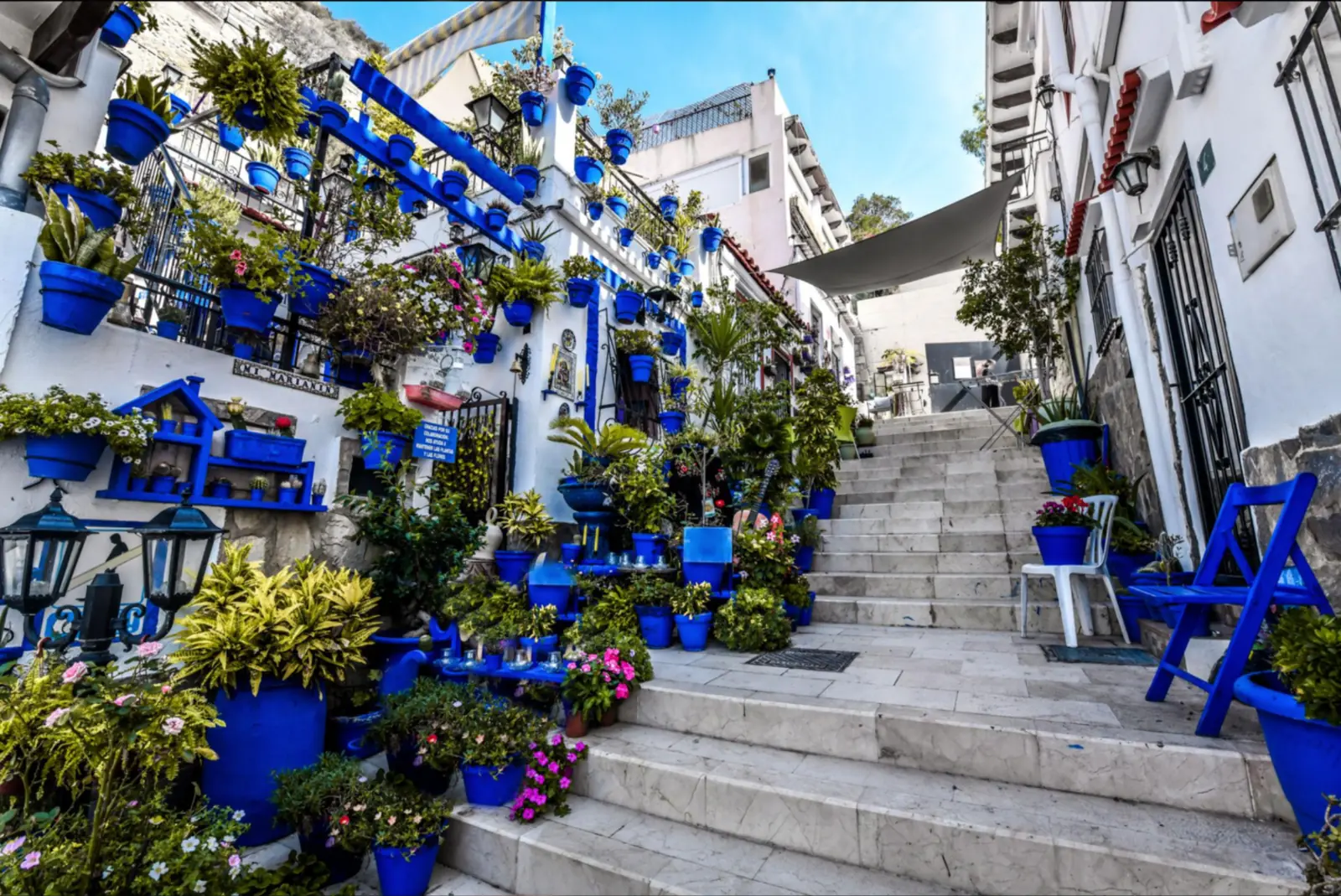
Quick Answer: Alicante Old Town is one of the most charming parts of Spain’s Costa Blanca, with colourful houses, flower-filled streets, historic churches, beautiful squares, and spectacular Mediterranean viewpoints. The highlights include Barrio de Santa Cruz, the Basilica of Santa María, the Co-Cathedral of San Nicolás, Plaza del Ayuntamiento, and the picturesque streets beneath Santa Bárbara Castle. Allow two to three hours to explore the historic centre, or longer if you want to enjoy its cafés, museums, and hidden corners.
Some places are beautiful because of their famous landmarks.
Others have a charm that is much harder to explain.
Alicante Old Town belongs to the second category.
You might turn a corner and find a narrow staircase disappearing between whitewashed houses. A little farther along, blue flowerpots spill over a balcony, and bright bougainvillea climbs towards the sunshine.
Then, just when you think you’ve discovered the prettiest street, another appears.
Above the rooftops, Santa Bárbara Castle watches over the city. Below, the Mediterranean sparkles in the distance, and the gentle rhythm of everyday Spanish life continues in the squares and cafés.
This is the Alicante that stays with you.
Not because there’s one extraordinary thing to see, but because the whole neighbourhood feels like a collection of little discoveries.
Whether you’re visiting for the first time, spending a weekend on the Costa Blanca, or arriving for a few hours on a cruise, exploring Alicante’s historic centre is one of the most rewarding experiences the city has to offer.
And the best part?
You don’t need an elaborate plan to enjoy it.
You just need comfortable shoes, a little curiosity, and enough time to wander.
1. Discover Barrio de Santa Cruz, the Heart of Alicante Old Town
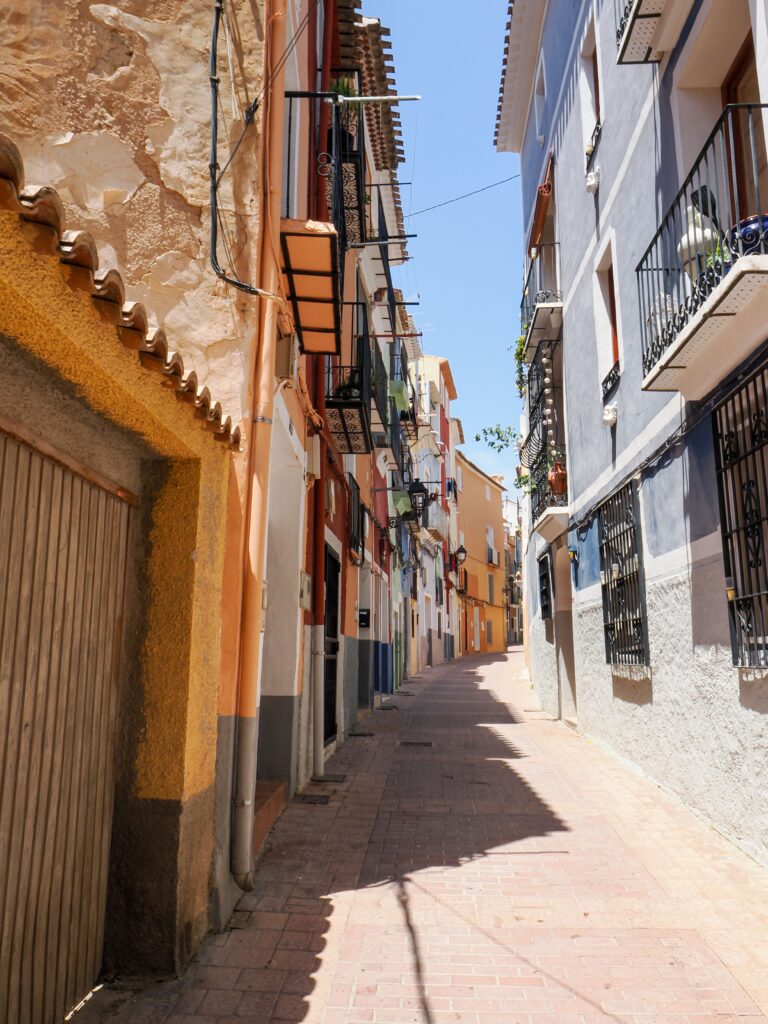
If there’s one neighbourhood that captures the character of historic Alicante, it’s Barrio de Santa Cruz.
Set on the slopes of Mount Benacantil, beneath Santa Bárbara Castle, Santa Cruz is famous for its narrow pedestrian streets, whitewashed houses, colourful decorations, and flower-filled balconies.
It’s the kind of place that makes you slow down without even realising it.
The Streets That Make Santa Cruz Special
As you begin exploring, the city gradually changes around you.
Busy roads give way to quiet lanes. Large buildings become small traditional houses, and staircases wind between walls painted in shades of white, blue, and warm Mediterranean colours.
There are flowers everywhere.
Terracotta pots sit on steps. Brightly painted planters hang from balconies, and bougainvillea spills across old walls.
Every turn seems to offer another photograph.
But Santa Cruz is more than a beautiful backdrop.
It’s a residential neighbourhood, with a history that reaches back through different periods of Alicante’s development. People still live behind those colourful doors, and the streets remain part of their everyday lives.
That’s something worth remembering as you explore.
Take photographs, enjoy the atmosphere, and respect the privacy of the residents who make this neighbourhood so special.
Where to Find the Best Views
As you climb higher into Santa Cruz, look for the viewpoint near the Ermita de Santa Cruz.
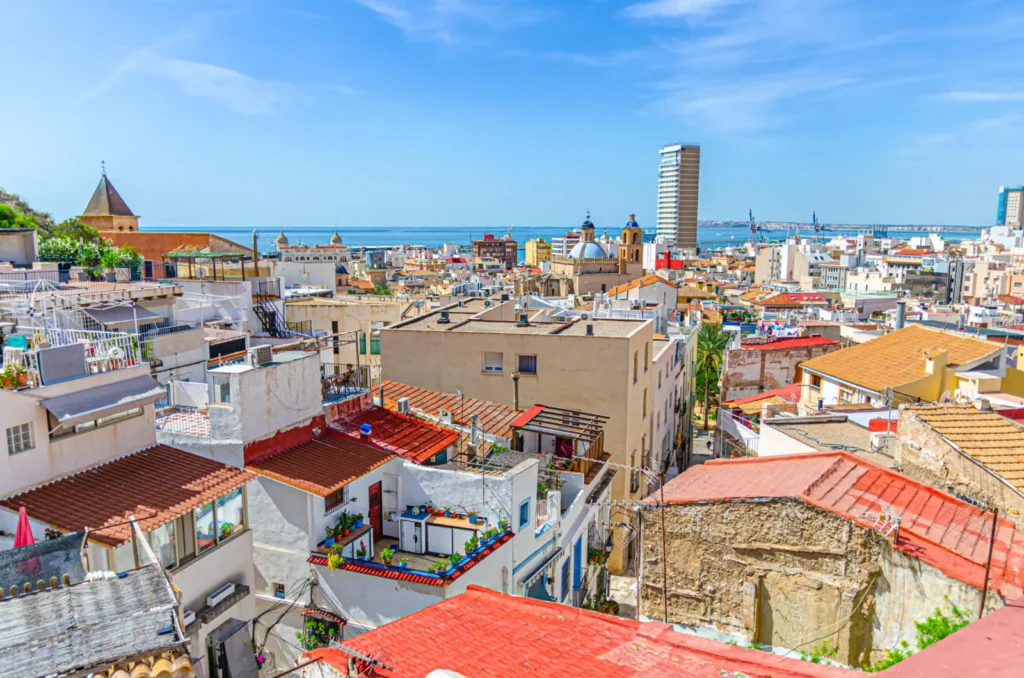
From here, you can enjoy panoramic views over the old town, Alicante’s port, and the Mediterranean Sea.
It’s one of those places where the climb suddenly feels worthwhile.
The rooftops spread out below, while the harbour and coastline remind you just how closely Alicante’s history is connected to the sea.
Why visit: Santa Cruz offers some of the prettiest streets, most memorable viewpoints, and most authentic atmosphere in Alicante.
Best time: Early morning for quieter streets, or late afternoon for beautiful light.
Good to know: The neighbourhood is accessible only on foot, and many streets are steep or stepped.
Local tip: Don’t try to find one perfect photograph. The real pleasure is discovering your own favourite corner.
2. Explore the Historic Churches That Tell Alicante’s Story
Alicante’s old town has a fascinating architectural heritage.
Among its narrow streets stand churches that reveal how the city changed over centuries, from its medieval past to the grand religious buildings of later periods.
Two are particularly worth visiting.
Basilica of Santa María
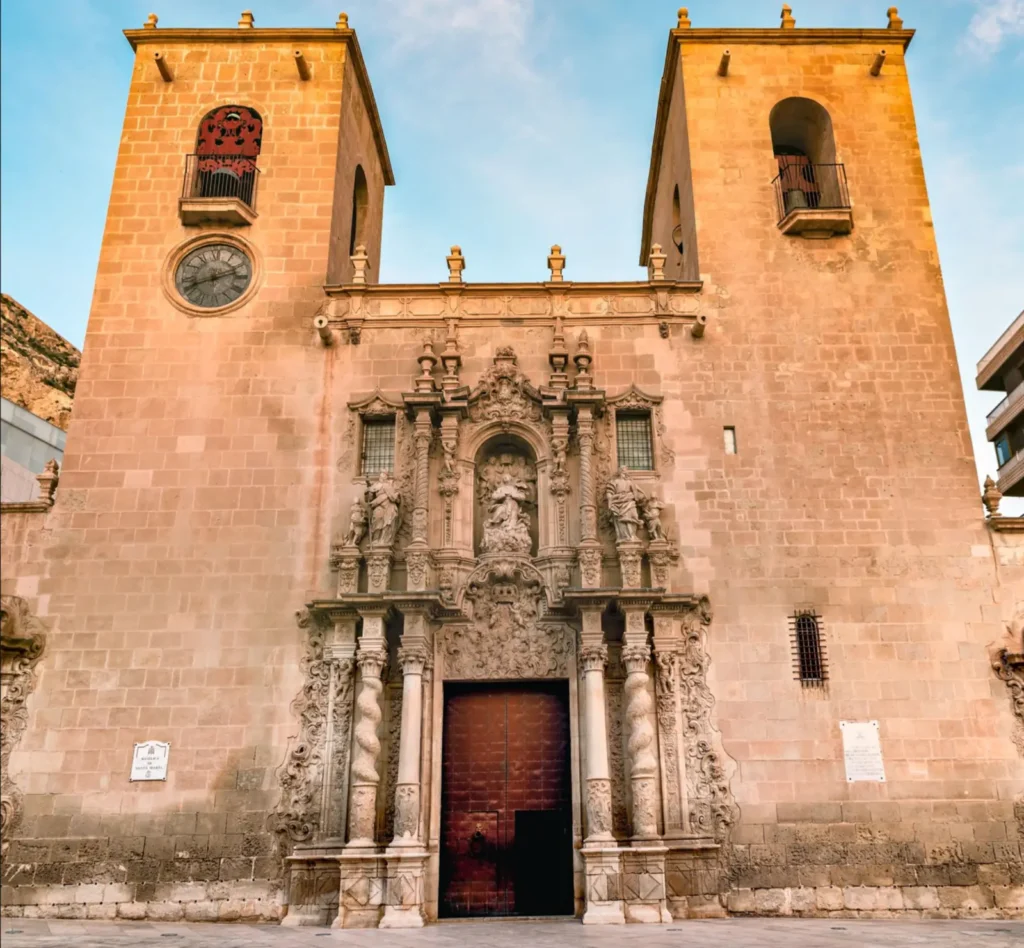
The Basilica of Santa María is one of Alicante’s most important historic buildings.
Standing in Plaza Santa María, it occupies the site of a former mosque, and is regarded as the city’s oldest surviving church.
Its richly decorated Baroque façade is particularly striking.
After walking through the small streets nearby, the scale and detail of the building can come as a surprise.
Take a moment to admire the stonework before deciding whether to explore inside.
The church also offers cultural visits that may include areas such as the choir, chapels, and bell tower, depending on the current visitor programme.
Just a few steps away, you’ll find MACA, Alicante’s Contemporary Art Museum, creating a wonderful contrast between the city’s historic and modern cultural identities.
Why visit: Beautiful religious architecture, centuries of history, and one of the most attractive squares in the old town.
Local tip: Combine the basilica with MACA rather than making separate journeys.
Co-Cathedral of San Nicolás
A short walk through the historic centre brings you to the Co-Cathedral of San Nicolás.
While Santa María is particularly admired for its ornate exterior, San Nicolás offers a different architectural experience.
The building is associated with Renaissance and Baroque design, and its impressive dome is one of its defining features.
Inside, the atmosphere is calm, spacious, and contemplative.
It’s a lovely place to escape the noise of the surrounding streets for a little while.
The cathedral also sits close to traditional shopping streets, restaurants, and cafés, making it easy to include during a leisurely walk.
Why visit: An impressive dome, elegant architecture, and an important part of Alicante’s religious heritage.
Good to know: Cultural visits may require a ticket, and tourist access differs from worship hours. Check the official schedule before visiting.
Local tip: Visit both churches if you can. Their contrasting architectural styles reveal different sides of Alicante’s past.
3. Wander Through Alicante’s Most Beautiful Squares and Streets
Not every memorable place in Alicante Old Town is a famous monument.
Some of its greatest pleasures are found in the streets and squares that connect everything together.
This is where the city feels most alive.
Plaza del Ayuntamiento
Plaza del Ayuntamiento is one of the most elegant spaces in Alicante’s historic centre.
The square is dominated by the grand Town Hall, an impressive eighteenth-century building with a formal façade and two prominent towers.
It feels very different from Santa Cruz.
Where the hillside neighbourhood is intimate and colourful, the Town Hall square is spacious, architectural, and ceremonial.
Take a few minutes to admire the building, and look around at the surrounding streets.
Beneath the Town Hall’s modern annex, an archaeological exhibition known as La Ciudad Descubierta, or The Discovered City, reveals remains from different periods of Alicante’s history.
It’s an interesting stop for visitors who enjoy discovering what lies beneath modern streets.
Calle Labradores
Calle Labradores is one of the historic centre’s most atmospheric streets.
Running through an area of traditional buildings, bars, and restaurants, it connects visitors with the lively social side of Alicante.
During the day, it’s a pleasant place to explore the architecture.
Later, the atmosphere changes as people gather for food, conversation, and drinks.
It’s a good reminder that Alicante’s old town isn’t simply a preserved historic district.
It’s still somewhere people meet, eat, and enjoy themselves.
Plaza de Santísima Faz
Close to the Town Hall, Plaza de Santísima Faz is a smaller, more intimate square.
Its setting offers a pleasant contrast to the grander civic spaces nearby.
Look around at the buildings, pause beneath the shade, and enjoy the feeling of being surrounded by the old city.
Sometimes these smaller places are the ones you remember most clearly.
Calle Mayor and the Surrounding Lanes
As you explore the area around Calle Mayor, you’ll find traditional façades, little shops, cafés, and streets leading towards the cathedral and waterfront.
This is an excellent area for wandering without a strict route.
One street might lead to a historic square.
Another might reveal an attractive doorway, a traditional restaurant, or a view towards the castle.
Why visit: These streets and squares show the everyday character of Alicante, beyond its most famous landmarks.
Local tip: Spend a little time walking without constantly checking your phone. The historic centre is compact enough to reward spontaneous exploration.
4. Discover the Hidden Corners Above the Old Town
One of the most beautiful things about Alicante is the way its historic neighbourhood rises towards the castle.
The higher you climb, the more the atmosphere changes.
The streets become quieter, the views grow wider, and you begin to appreciate the relationship between the old town, the hillside, and the Mediterranean.
Ermita de Santa Cruz
Near the upper part of Barrio de Santa Cruz stands the Ermita de Santa Cruz.
This small historic chapel has a particularly meaningful place in local tradition.
Its origins are associated with the medieval period, although the building visible today dates from the nineteenth century.
The chapel is closely connected with Alicante’s Holy Week celebrations, when religious processions move through the neighbourhood’s steep streets.
Even outside festival periods, it’s a fascinating place to visit.
The surrounding streets are peaceful, and the nearby viewpoint provides one of the neighbourhood’s loveliest panoramas.
Mirador de Santa Cruz
The Mirador de Santa Cruz is one of the most rewarding viewpoints in the historic centre.
From here, the rooftops of Alicante stretch towards the harbour, and the Mediterranean creates a beautiful blue backdrop.
It’s particularly atmospheric when the afternoon light begins to soften.
Bring your camera, but don’t feel you need to capture every angle.
Sometimes it’s better to put the phone away, and simply enjoy the view.
The Streets Around San Roque
The historic San Roque area offers another collection of narrow streets, traditional houses, and interesting corners on the slopes beneath the castle.
It’s less about finding one famous attraction, and more about appreciating the character of the neighbourhood.
As you explore, look for little architectural details, traditional tiles, and the changing views between buildings.
Why visit: Quiet corners, historic character, and some of Alicante’s most memorable elevated views.
Good to know: The upper streets involve significant climbing, and may be unsuitable for visitors with reduced mobility.
Local tip: During summer, explore these areas earlier in the morning or later in the afternoon, when the temperatures are more comfortable.
5. Experience Alicante Old Town Through Its Food and Local Atmosphere
A historic neighbourhood isn’t only about buildings.
It’s also about the people, the conversations, and the food that brings everyone together.
Alicante’s old town is an excellent place to experience the region’s Mediterranean food culture.
Discover the Tapas Streets
The streets around Calle Labradores, San Nicolás, and the surrounding historic centre are known for their restaurants, bars, and lively atmosphere.
Some places feel traditional, with simple interiors and local dishes.
Others have a more contemporary style, combining regional ingredients with modern cooking.
There’s no need to choose the most elaborate restaurant.
Sometimes a few good tapas, fresh bread, and a pleasant terrace are exactly what you want.
Try Alicante’s Famous Rice Dishes
Alicante has a strong rice tradition, with dishes that reflect its Mediterranean location and local ingredients.
Arroz a banda is one of the region’s best-known specialities.
Depending on the restaurant, you may also find seafood rice, rice prepared with vegetables, or other local variations.
If you have time for a leisurely lunch, a freshly prepared rice dish is a wonderful way to experience Alicante’s culinary identity.
Local tip: Some rice dishes are prepared to order and may require a minimum number of diners or advance notice. Check the menu before choosing.
Enjoy the Evening Atmosphere
Alicante Old Town has a different personality after sunset.
The streets become livelier, restaurant terraces fill, and the warm evening air encourages people to stay outside.
If you’re visiting during summer, this can be one of the most enjoyable times to explore.
The intense afternoon heat begins to fade, and the historic buildings take on a softer appearance beneath the streetlights.
Find a terrace, order something you enjoy, and watch the city go by.
Why visit: The old town’s food, restaurants, and evening atmosphere are an essential part of its character.
Local tip: If you’re visiting at the weekend, consider booking a restaurant in advance, particularly during busy holiday periods.
6. Explore the Museums and Cultural Attractions Around the Old Town
If you have more than a couple of hours, Alicante’s historic centre offers several interesting cultural experiences.
They’re especially useful if you’re visiting during the hotter months, or simply want to discover more of the city’s history.
MACA: Alicante’s Contemporary Art Museum
Located beside the Basilica of Santa María, MACA brings contemporary art into one of the oldest parts of the city.
The contrast is part of its appeal.
Outside, you have historic stone buildings and traditional streets.
Inside, you can explore modern artistic ideas and collections associated with important twentieth-century artists.
It’s a wonderful option for visitors who enjoy culture, architecture, and quieter experiences.
The Nativity Museum
Alicante’s Museo de Belenes, or Nativity Museum, is another interesting attraction in the historic centre.
Dedicated to the tradition of nativity scenes, the museum offers an unusual perspective on Spanish craftsmanship, religious art, and cultural customs.
It’s a relatively specialised attraction, but that’s part of what makes it memorable.
Not every museum needs to be enormous to be worth visiting.
Alicante’s Water Museum
The Museo de Aguas de Alicante, located around Plaza del Puente, explores the relationship between the city and its water supply.
For a Mediterranean destination where water has always been important, it’s an interesting subject.
The museum provides a different perspective on Alicante’s development and is particularly appealing to visitors who enjoy local history beyond the most obvious attractions.
The Discovered City Archaeological Exhibition
Near the Town Hall, La Ciudad Descubierta reveals archaeological remains associated with Alicante’s earlier history.
It’s a reminder that beneath the modern city lie traces of many different periods, communities, and ways of life.
Why visit: Alicante’s museums add depth to your visit and offer alternatives to outdoor sightseeing.
Good to know: Opening times, admission arrangements, and temporary closures can change. Check individual museum information before visiting.
Local tip: Choose one museum that genuinely interests you, rather than trying to fit every cultural attraction into a short visit.
7. Plan the Perfect Walking Route Through Alicante Old Town
The beauty of Alicante Old Town is that many of its most memorable places sit within a relatively compact area.
You can explore the lower historic centre at a relaxed pace, then decide whether to climb into Santa Cruz for the views.
Here’s a route that brings together the highlights.
Stop 1: Begin at Plaza del Ayuntamiento
Start in the Town Hall square, where you can admire one of Alicante’s grandest historic buildings.
Spend a little time looking at the architecture and exploring the surrounding streets.
Stop 2: Discover the Co-Cathedral of San Nicolás
Continue towards San Nicolás.
If visitor access is available, step inside to appreciate the dome, architectural details, and peaceful atmosphere.
Stop 3: Explore Calle Labradores and the Historic Lanes
Wander through Calle Labradores and enjoy the lively character of the old town.
This is a good opportunity to stop for a coffee, or simply explore the nearby streets.
Stop 4: Visit the Basilica of Santa María
Make your way towards Plaza Santa María.
Admire the basilica’s beautiful façade, and consider visiting MACA if contemporary art interests you.
Stop 5: Climb Into Barrio de Santa Cruz
From the lower historic centre, begin exploring the narrow streets of Santa Cruz.
Take your time.
The staircases can be steep, but the colourful houses, flowers, and quiet corners make the effort worthwhile.
Stop 6: Enjoy Mirador de Santa Cruz
Continue towards the viewpoint near the hermitage.
Pause to enjoy the panorama across the city, harbour, and Mediterranean.
This is one of the best places to appreciate Alicante from above.
Stop 7: Return to the Lower Town for Food or a Waterfront Walk
Make your way back down through the historic streets.
You could stop for tapas, enjoy a relaxed lunch, or continue towards the Explanada de España and marina.
It’s a beautiful way to finish your visit.
How Long Does the Walk Take?
Allow approximately two to three hours for a relaxed exploration of the old town, including Santa Cruz.
If you want to visit churches, museums, and restaurants, half a day is a better choice.
The route is flexible, and you can shorten it by staying within the flatter streets of the lower historic centre.
Can You Explore Alicante Old Town by Tuk-Tuk?
A private electric tuk-tuk tour can be a comfortable way to get an introduction to Alicante’s wider historic centre, waterfront, and main landmarks.
Tuk Tuk Limo Touren offers private sightseeing experiences designed to help visitors discover the city’s character, history, and beautiful surroundings.
This can be especially useful if you’re arriving for a short visit, travelling with family, or want to get your bearings before exploring independently.
However, Barrio de Santa Cruz is a pedestrian-only neighbourhood, with steep staircases and narrow lanes.
A tuk-tuk cannot drive through those streets.
The best approach is to combine a sightseeing tour of accessible areas with a walking visit to the neighbourhood itself.
Check the exact route, stops, and arrangements with the operator before booking.
You can explore the private Alicante sightseeing tours, oder plan your experience.
Frequently Asked Questions About Alicante Old Town
Where is Alicante Old Town?
Alicante Old Town is located in the historic centre of the city, beneath Santa Bárbara Castle and close to the Mediterranean waterfront. Its most picturesque hillside neighbourhood is Barrio de Santa Cruz.
Is Alicante Old Town worth visiting?
Absolutely. Alicante Old Town is one of the city’s most beautiful areas, with colourful houses, historic churches, traditional streets, charming squares, and impressive views towards the Mediterranean.
What is the prettiest street in Alicante Old Town?
There isn’t one universally agreed prettiest street. The stairways and narrow lanes of Barrio de Santa Cruz are particularly photogenic, thanks to their whitewashed houses, colourful doors, and flower-filled balconies.
How long do you need to explore Alicante Old Town?
Two to three hours is enough for a relaxed walking visit. Allow half a day if you want to explore museums, enter historic churches, enjoy lunch, and spend more time in Santa Cruz.
Is Alicante Old Town free to visit?
Yes. Walking through the streets, squares, and public viewpoints is free. Some churches, museums, and cultural experiences may charge admission.
Is Alicante Old Town suitable for families?
Yes, particularly the lower historic centre, where children can enjoy exploring squares and discovering interesting streets. However, Santa Cruz contains steep staircases and may be challenging with pushchairs or very young children.
Can you visit Alicante Old Town at night?
Yes. The lower historic centre is a popular area for evening dining, tapas, and socialising. Santa Cruz is primarily residential, so visitors should respect residents, particularly during the evening.
Is Barrio de Santa Cruz the same as Alicante Old Town?
Not exactly. Barrio de Santa Cruz is one of the most picturesque historic neighbourhoods within the wider old-town area. Alicante’s historic centre also includes the Town Hall, churches, squares, museums, and surrounding streets.
Can you walk from Alicante Old Town to the beach?
Yes. The lower historic centre is within walking distance of Playa del Postiguet, the Explanada de España, and the marina. The exact walking time depends on where you begin.
What is the best time to visit Alicante Old Town?
Spring and autumn are particularly pleasant for exploring on foot. During summer, early mornings and late afternoons are more comfortable for walking through Santa Cruz’s steep streets.
The Alicante You’ll Remember Most
Alicante has beautiful beaches, a magnificent castle, and a waterfront that seems made for sunny afternoons.
But its old town offers something different.
It’s where the city becomes more personal.
Where history isn’t only something you read about in a museum, but something you feel as you walk between traditional houses and centuries-old churches.
Where a simple staircase can become your favourite photograph.
Where a quiet square, a little café, or a view between rooftops can stay in your memory long after the holiday ends.
You don’t need to rush through Alicante Old Town.
In fact, the slower you explore, the more it reveals.
Wander through Santa Cruz, discover the beautiful churches, enjoy the local food, and give yourself permission to take the occasional wrong turn.
Sometimes that’s exactly how you find the best places.
And if you’d like to begin your Alicante adventure with a relaxed introduction to the city’s wider sights, discover the private electric tuk-tuk tours in Alicante from Tuk Tuk Limo Tours.
The castle may be Alicante’s most famous landmark, but its old town might just become your favourite memory.
Ready to see it yourself?
Skip the tour bus. Our electric tuk-tuks take you through the streets, stories, and hidden corners that guidebooks miss.


