enes +34 628 101 560 reservas@tuktuklimotours.com
Meeting point: Calle Mayor 90, Madrid
+34 628 101 560 reservas@tuktuklimotours.com
Meeting point: Calle Mayor 90, Madrid
enes

Christmas lights tour 90 min.

0
Price
From119€
Price
From119€
Save To Wish List

Adding item to wishlist requires an account

26


Why Book With Us?

  • Best price and satisfaction guaranteed!
  • In all our tours we will include small little tipical Spanish Madrilenian streets like Calle Cuchilleros, Cava de San Miguel, Cava Baja, La Latina and much more.
  • We have more then 15 years of expirience in tourism and hospitality.
    Let us show you the best way to discover Madrid!


Get a Question?

Do not hesitage to give us a call. We are an expert team and we are happy to talk to you.

+34|628 101 560

reservas@tuktuklimotours.com

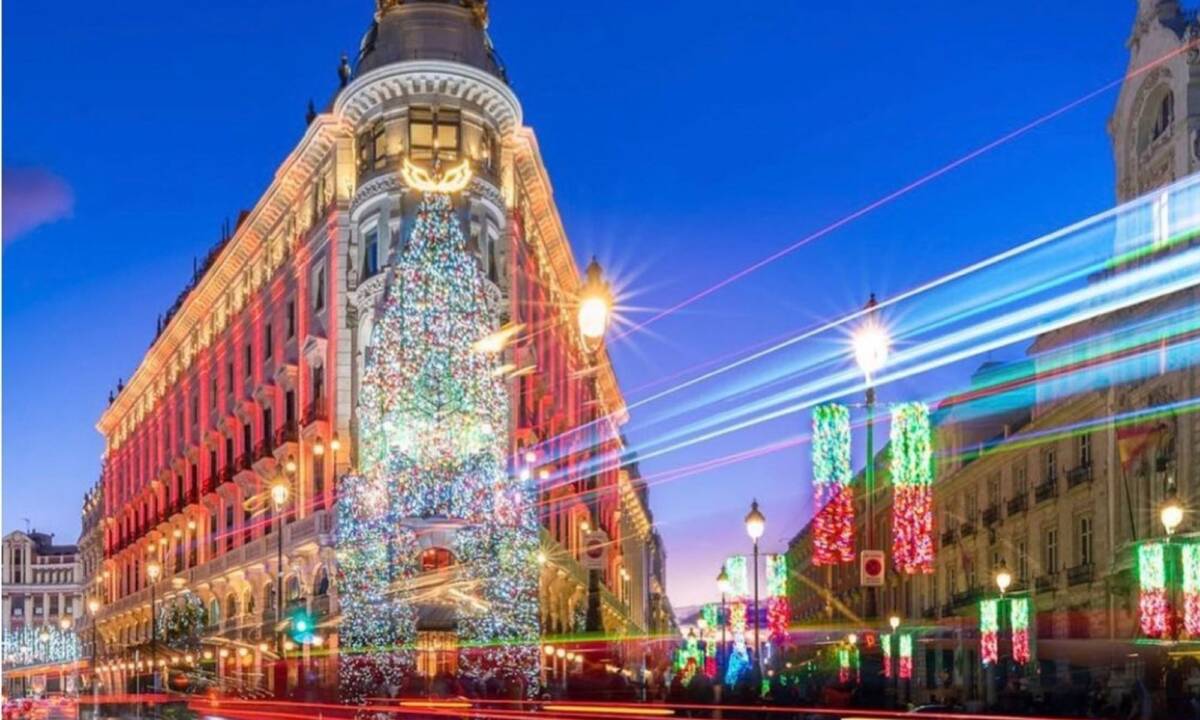
Get into the magic of the Christmas holidays with our Electric Christmas Lights Tour by Tuk Tuk through the heart of Madrid. Experience the charm of the city's most emblematic monuments as they come alive with their festive glow. Our eco-friendly electric tuk tuks will take you through the charming downtown streets, adorned with dazzling Christmas lights that illuminate the spirit of the season.

Immerse yourself in the festive atmosphere as we take you to Madrid's most emblematic places, each transformed into a winter wonderland. From the bright lights of the Puerta del Sol to the majestic decorations of the Plaza Mayor, you will witness the beauty of the city in a whole new light.

Join us on a unique and eco-friendly adventure that combines the charm of a traditional tuk tuk ride with the cheerful glow of Christmas decorations. Create unforgettable memories with your family and friends as you explore the festive delights that make Madrid a magical city during this special time of year. Don't miss the opportunity to enjoy the Christmas spirit on our Electric Tuk Tuk Christmas Light Tour, where the magic of Madrid meets the magic of Christmas!

  • Up to 4 persons
  • 90 minutes
  • All ages
  • Availability 18.00 - 21.00
Tour details

Languages

  • Español
  • Spanish
  • French
  • Poruguese
  • German
  • Macedonian
  • Serbian
  • Slovenian
  • Croatian

Departure and return locations

Aarde, Puerta de Alcalá(Google Map)

Meeting time

5-10 minutes before

Price includes

  • Driver/guide
  • Stops to see monuments
  • Tuk tuk

Price DOES NOT include

  • Tickets to see Monuments
  • Boat for the guide
Itinerary

Puerta de Alcalá (Meeting point)

Erected in 1778 by the Italian architect Francesco Sabatini, this triumphal gate was once the main entrance to the city. It was commissioned by King Charles III – eventually dubbed the Best Mayor of Madrid – who was not impressed by the door that welcomed him when he first arrived in 1759. It is located next to El Retiro Park in the center of the Plaza de la Independencia, the crossroads of three of the most famous streets in the city: Alcalá Street, the longest street in the city, Alfonso XII Street, which leads to the Atocha train station, and Serrano Street, the most glamorous street in Madrid.

The Santiago Bernabéu Stadium

The Santiago Bernabéu Stadium is a soccer stadium in Madrid, Spain. With a current capacity of 81,044 seats, it has been Real Madrid’s home stadium since its completion in 1947.
The Santiago Bernabeu is one of the most famous soccer stadiums in the world. It has hosted the final of the European Cup/UEFA Champions League on four occasions: in 1957, 1969, 1980 and 2010[4] and hosted the second leg of the 2018 Copa Libertadores final. The final matches of the 1964 European Nations Cup and the 1982 FIFA World Cup were also held at the Bernabéu, making it the first stadium in Europe to host both a UEFA European Championship, a FIFA World Cup Final and a Copa Libertadores Final. Translation made with the free version of the translator www.DeepL.com/Translator

Castellana

In the 17th and 18th centuries, the current Paseo de la Castellana crossed Madrid from north to south. Beginning at the Plaza de Colón, in the south, the first stretch of this road has preserved some noble mansions that were once the typical buildings of the area, and now house embassies, ministries and international cultural centers. There is the Museo de Arte Público, formerly the ‘Museo de Escultura al Aire Libre’, which contains works by Joan Miró, Pablo Serrano and Eduardo Chillida, among other prominent artists.

Gran Vía

More than a hundred years old, Gran Vía, in the Sol / Gran Vía area, is one of the main arteries of the city and one of its most emblematic avenues. Its construction, between 1910 and 1931, marked the beginning of the modernization of the city, with the appearance of the first skyscrapers in the country and the adoption of modern architectural trends originating in the United States.

Callao Square

Plaza Callao, famous as much for its role as the heart of cinematic and theatrical Madrid as for its eternal bustle and art deco style. Architecture, film buffs and interested visitors will find much to discover here. Beyond a wide variety of plays and films, the square itself looks like the embodiment of a 1920s architect’s imagined “city of the future.” It is as much a place to gawk at as it is to explore.

Plaza España

This large square is located in the center of the city, at the intersection of Gran Vía and Princesa streets. Here you will find the Cervantes Monument, one of the most popular tourist attractions. The monument was built by Rafael Martínez Zapatero and Lorenzo Cullaut Valera and was inaugurated in 1915.

Temple of Debod

It is an Egyptian temple from the 2nd century BC, transported to the Cuartel de la Montaña Park in Madrid. The temple was donated to Spain by the Egyptian government to save it from flooding after the construction of the Aswan High Dam.

Royal Palace

Home to the Kings of Spain from Charles III to Alfonso XIII, the Royal Palace of Madrid takes us on a journey through the history of Spain. Although it is no longer the home of the royal family, it is still their official residence.

Long before Madrid became the capital of Spain, Emir Mohammed I chose Magerit (the city’s Arabic name) as the site for a fortress to protect Toledo from the advancing Christians. The building was eventually used by the kings of Castile until it finally became what would be known as the Old Alcazar in the 14th century. Charles I and his son Philip II converted the building into a permanent residence for the Spanish royal family. However, in 1734 a fire burned the Hapsburg Palace to the ground, and Philip V ordered the construction of the palace that stands today.

Plaza de Oriente

The Plaza de Oriente is a pedestrian plaza that borders the Royal Palace of Madrid. The square was designed in the mid-19th century and is adorned with small gardens and many statues.

Opera

Ópera is a station on Line 2, Line 5 and Ramal of the Madrid Metro. It is located in tariff zone A, in Plaza de Isabel II, in the central district of Madrid. The station provides access to an area with tourist landmarks such as the Royal Theater, the Plaza de Oriente and the Royal Palace. Its name comes from Madrid’s nearby opera house, the Teatro Real.

Almudena Cathedral

The Cathedral of Madrid, the Almudena Cathedral, took more than a hundred years to complete. The cathedral looks much older than it actually is: it was consecrated as recently as 1993.
Shortly after King Philip II made Madrid the capital of Spain in 1561, he wanted a cathedral for his new capital. Due in part to political turbulence and strong opposition from the powerful archdiocese of the then largest city, Toledo, construction was constantly postponed.

Main Street

Madrid’s Calle Mayor hides a treasure of the Spanish Golden Age, whose existence is not commonly known. It is the narrow ¨ building¨, the house where the famous Spanish playwright Pedro Calderón de la Barca lived.

San Miguel Market

Puerta del Sol is a public square in Madrid, one of the best known and busiest places in the city. This is the center (Km 0) of the Spanish radial road network. The square also contains the famous clock whose bells mark the traditional eating of the Twelve Grapes and the beginning of a new year. The New Year’s celebration has been broadcast live on national television since 31 December 1962.

Botín restaurant

Founded in 1725, Restaurante Botín is the oldest restaurant in the world according to the Guinness Book of Records and one of the touchstones of traditional Madrid cuisine. Over the years he has won numerous awards and recognitions.

Cava Baja

Urban legends say that this part of the city is where the Arabs hid and then escaped from the Catholics when they took over Madrid centuries ago. That’s one of the reasons, they say, why it used to be full of taverns.

Part of that tradition remains intact to this day, as you will find bars, tavern-type but also traditional restaurants, hostels, pensions, flamenco bars, cafes, a movie theater and a pharmacy.

Royal Basilica of St. Francis the Great

The Royal Basilica of San Francisco el Grande is a Roman Catholic church in the center of Madrid, Spain, located in the La Latina neighborhood. The main facade faces the Plaza de San Francisco, at the intersection of Bailén, Gran Vía de San Francisco and Carrera de San Francisco. It is part of the convent of Jesus and Mary of the Franciscan order. The convent was founded in the 13th century on the site of a chapel.

Toledo Roundabout

The Puerta de Toledo is located in the Puerta de Toledo traffic circle in the southwest of Madrid. This free-standing gate is 19 meters high and is composed of three arches. The central arch is the highest. It has a rounded semicircular arch and was the main gateway on the road to the city of Toledo in past centuries. It is flanked by two smaller square linteled doors with ornamental columns on each side.

Atocha

Atocha station is one of the busiest tourist centers in Spain, serving 90 million passengers each year. That volume breaks down to some 60 million passengers on local Cercania services, 11 million on medium and long-distance trains and 19 million passengers on the metro system, all in one building!

Buen Retiro Park

Located in the heart of Madrid, its origins date back to the reign of Philip IV, when the Buen Retiro Palace was built by the Count-Duke of Olivares. The Astronomical Observatory and the Royal Porcelain Factory of Buen Retiro were added during the reign of Charles III. During the reign of Ferdinand VII, the pond pier and the zoo of the Casa de Fieras were built. Among the highlights, the park includes the large pond with the monument to Alfonso XII, the Casa de Velázquez and the Crystal Palace, the Rose Garden and the Parterre, where one of the oldest trees in Madrid, a Taxodium mucronatum, can be found. In 1935, it was declared a garden of historical-artistic value.

Photos
5 travellers are considering this tour right now!
From119€
Book Now
Reserva Ahora Reserva Ahora